A Mother’s Terrifying Discovery About Her Daughter
My Daughter Went Silent Around Her Stepfather—Until I Came Home Early
Part 1: The Silence That Should Have Warned Me

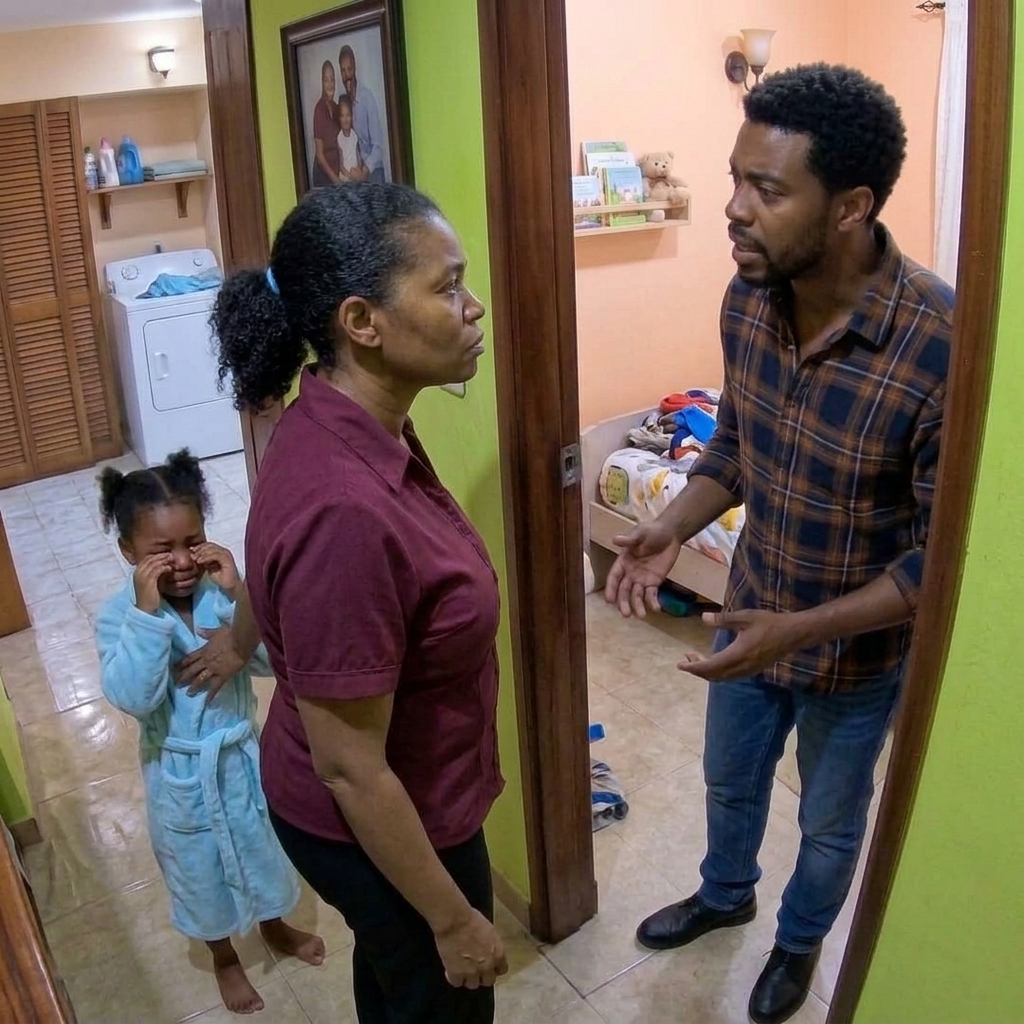
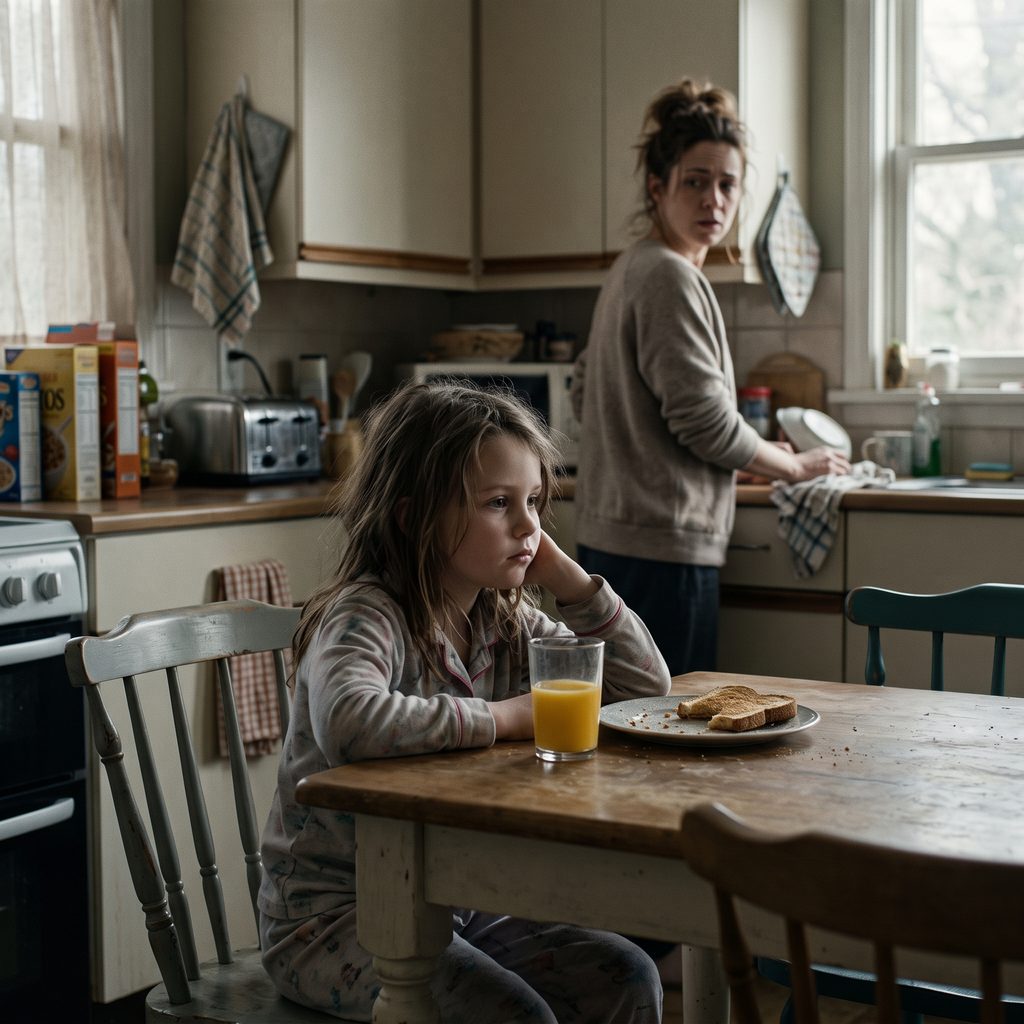
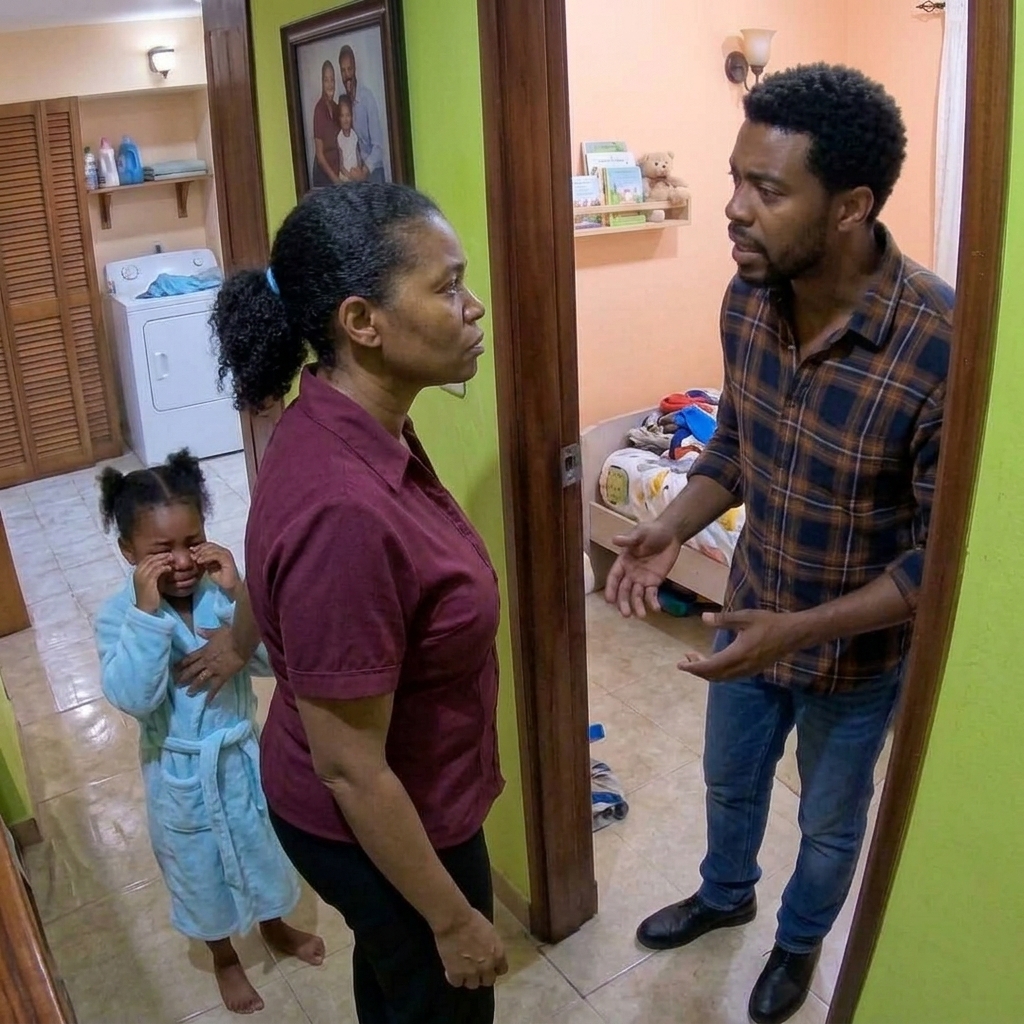
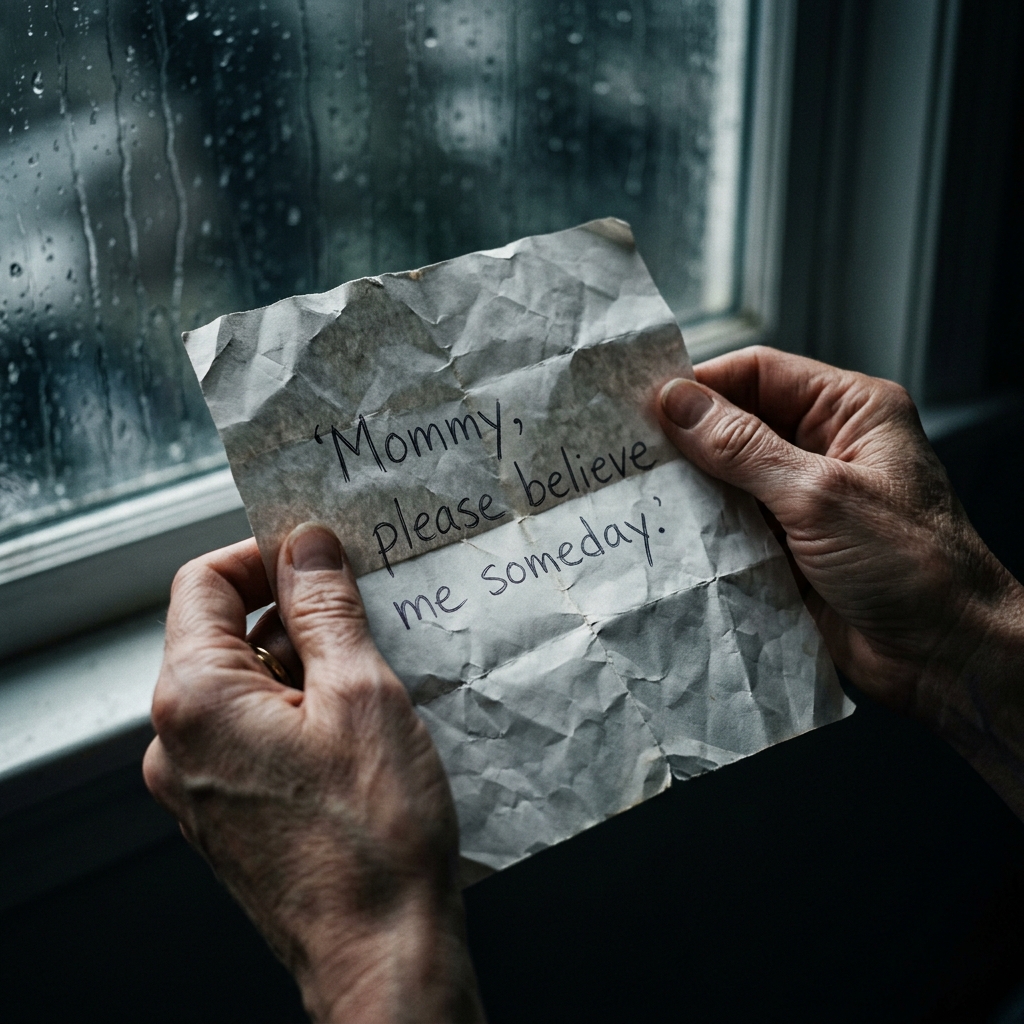
The first time I realized something was wrong with my daughter, she was sitting at the kitchen table, staring at a glass of orange juice she had not touched. She was seven years old, usually full of questions, laughter, and stories about school, yet that morning she seemed determined to disappear into herself. When I asked what was bothering her, she smiled too quickly and whispered that she was tired. I believed her because I wanted to believe her. My name is Laura Bennett, and for almost two years, I had convinced myself that marrying Daniel had given my daughter, Sophie, the stable family she deserved after losing her father. Daniel had always been charming around other people. He remembered birthdays, helped with homework, repaired broken toys, and brought home little gifts whenever he traveled for work. My friends called me lucky. My mother said I finally looked happy again. Even Sophie had seemed comfortable around him when we first moved into our house together. But somewhere along the way, something changed. The change was subtle enough that I could explain away almost anything. Sophie stopped running toward Daniel when he came home. She began asking whether I would be back before dinner whenever I left for work. She became unusually quiet whenever he entered a room, and she would sometimes abandon a game halfway through because he had called her name. I blamed the adjustment to a new family, the demands of school, and the difficult emotions children sometimes experience after the death of a parent. Daniel always had an explanation ready. “She is growing up, Laura,” he told me one evening when I mentioned that Sophie seemed distant. “Children go through phases. Don’t turn every little thing into a problem.” He said it gently, even smiling as he placed a cup of tea beside me. I felt embarrassed for worrying, so I apologized. That became a pattern. Whenever I expressed concern, Daniel made me feel unreasonable. If Sophie refused to sit beside him at dinner, he said she was becoming stubborn. If she asked me to stay in her bedroom until she fell asleep, he said I was encouraging dependency. If she became silent when he offered to help her get ready for bed, he reminded me that children needed consistent routines. The bathing routine was the detail I noticed most often. Sophie had always enjoyed her evening bath, singing to herself and turning ordinary soap bubbles into imaginary clouds. After Daniel began taking over the task on evenings when I worked late, those cheerful sounds disappeared. She never complained directly. Instead, she would ask me to come home earlier, then look down whenever I explained that I could not. One night, as I tucked her into bed, she caught my wrist. “Mommy, will you be home tomorrow?” she asked. “Of course, sweetheart. Why?” Her fingers tightened around mine. For a moment, I thought she might tell me something important. Then she glanced toward the bedroom door. Daniel was standing in the hallway. “Everything all right in here?” he asked. Sophie immediately released my hand. “I’m sleepy,” she whispered, turning toward the wall. Daniel smiled at me. “See? Nothing to worry about.” I wanted to ask why she had changed so suddenly, but the words never came. The following week, I noticed that Sophie had begun drawing pictures with our family standing far apart. In one drawing, I stood beside a yellow house, Sophie stood near a tree, and Daniel appeared as a small figure at the edge of the paper. When I asked her about it, she snatched the drawing from my hands. “It’s nothing,” she said. That evening, Daniel told me she had been difficult after school. According to him, she had refused to listen, complained about everything, and cried over a minor disagreement. “She needs boundaries,” he said. “You cannot keep treating her like a baby.” I wanted to defend my daughter, but exhaustion won. I worked long shifts at a medical billing office, paid most of the household expenses, and worried constantly about giving Sophie a secure future. Daniel had persuaded me to believe that dividing responsibilities was part of being a good partner. I did not understand that trusting someone with a responsibility was not the same as refusing to question what was happening. Everything changed on a rainy Thursday afternoon. A meeting at work was canceled unexpectedly, and I was allowed to leave several hours early. I decided not to call home. I imagined surprising Sophie with her favorite strawberry cupcakes, helping her with her school project, and spending a quiet evening together. When I pulled into the driveway, Daniel’s car was already there. The house looked ordinary, the curtains half drawn against the rain. I unlocked the front door and heard the television playing downstairs. Then I noticed that Sophie’s schoolbag lay abandoned beside the staircase, one strap twisted underneath it. A small, crumpled piece of paper protruded from the front pocket. I pulled it out. It was a drawing, folded into quarters. On the back, in Sophie’s uneven handwriting, were five words: “Mommy, please believe me someday.” My hands began to shake. Before I could unfold the picture, I heard Daniel’s voice from the upstairs hallway. “Sophie, I told you not to talk about that.” A silence followed. Then my daughter answered in a voice so small I almost could not hear it. “But I want Mommy.” The cupcakes slipped from my hand and landed against the floor. I climbed the stairs, each step seeming to take an eternity. The bathroom door was partly open. Daniel stood outside it, looking startled when he saw me. Sophie was safely covered in a bathrobe, standing near the doorway with tears running down her cheeks. Nothing about the scene explained the entire truth, but everything about my daughter’s expression told me that I could no longer pretend her silence was normal. “Laura,” Daniel said quickly, “you’re home early.” I barely heard him. I was looking at Sophie. Her face changed when she saw me, and for one terrible second she looked more frightened than relieved. Then she whispered something that shattered the world I thought I knew. “Mommy, he said you wouldn’t believe me.” I stepped toward her, but Daniel moved between us. “This is being taken completely out of context,” he insisted. His voice was calm, almost offended, as though I were the one behaving irrationally. I looked down at the crumpled drawing still clutched in my hand, then back at my husband. For the first time since our wedding, I was not interested in hearing his explanation. I wanted to hear my daughter. And when Sophie finally opened her mouth to tell me what had been happening, Daniel’s expression changed so dramatically that I understood something far more frightening than an ordinary family disagreement was unfolding in my home.
Part 2: The Truth Hidden Behind Closed Doors
I took Sophie into her bedroom and closed the door, leaving Daniel in the hallway. He protested immediately, saying we needed to discuss the situation as a family. I told him we would speak later. For once, I did not soften my words to protect his feelings. Sophie sat on her bed with her hands folded tightly in her lap. I knelt in front of her, careful not to rush her, and told her that she was not in trouble. “You can tell me anything,” I said. “You don’t have to protect anybody from the truth.” She stared at me for several seconds before asking, “Are you going to be angry?” The question hurt more than anything else she could have said. “Not with you, sweetheart. Never with you for telling me something that worries you.” Her eyes filled with tears. She explained that Daniel had been making her feel uncomfortable for months. During the evenings when I worked late, he insisted on controlling her bedtime routine, even when she asked to wait for me or wanted to manage ordinary parts of getting ready herself. When she objected, he told her she was being difficult and that good children listened to adults. He had also begun making rules about what she could tell me. He said that if she complained, I would become upset, our marriage would fall apart, and she might have to leave the only home she remembered since her father’s death. Sophie could not explain every detail clearly. She jumped between incidents, confused about dates and sometimes unable to finish a sentence. I did not force her to describe anything she was not ready to discuss. What mattered was that she felt unsafe and had been afraid to tell me. I asked whether she wanted Daniel near her. She shook her head so quickly that her hair fell across her face. “I don’t want him to be alone with me anymore,” she whispered. That was enough. I promised her that I would take her somewhere she felt safe while we worked out what needed to happen next. I called my older sister, Rachel, who lived twenty minutes away. I told her we needed somewhere to stay, without going into details over the phone. She heard the fear in my voice and said she would be waiting for us. When I returned downstairs, Daniel was pacing beside the kitchen island. “What exactly did she tell you?” he demanded. “This is serious, Laura. You cannot make decisions based on a child’s imagination.” I watched him carefully. His anger was not the only thing that unsettled me. It was the speed with which he tried to take control of the conversation. He wanted me to explain what Sophie had said before he had to answer for anything himself. “She says she is frightened of you,” I replied. “That is what matters right now.” He laughed once, sharply. “Frightened of me? I have done everything for that child. I have given her a home, paid for her activities, and treated her as my own.” “Then why does she feel she cannot tell me what happens when I’m gone?” His expression hardened. “Because you have encouraged her to manipulate you.” For years, those words would have made me question myself. This time, they only made me more certain that Sophie and I needed distance. Daniel followed me toward the front door, insisting that I was destroying our marriage over a misunderstanding. He reminded me of the money he had contributed to the house, the holidays we had taken, and the promises we had made. He spoke about our future as if it were a contract I was legally forbidden to reconsider. I packed Sophie’s clothes, medication, school supplies, and favorite stuffed rabbit. While I worked, I noticed that Daniel had begun checking his phone repeatedly. Whenever I entered the room, he turned the screen away. At one point, a message appeared before he could lock it. I saw only a few words: “Did she tell Laura?” He snatched the phone from the table. “Work,” he said when he noticed me looking. I did not confront him. I was beginning to understand that every conversation with him had become a contest in which he controlled the information, decided which questions were reasonable, and punished anyone who challenged his version of events. I took Sophie to Rachel’s house before nightfall. There, with her aunt nearby and a warm blanket around her shoulders, Sophie finally ate half a sandwich. I sat beside her while Rachel made tea, trying to absorb what had happened. I wanted answers, but I also knew that fear and confusion could make it difficult for a child to tell a complicated story. The next morning, I contacted a child-safety professional and explained my concerns. I followed their advice about keeping Sophie away from Daniel, documenting what I had observed, and arranging an appropriate, child-sensitive assessment. I also asked about the proper process for reporting suspected abuse or coercive behavior in our area. I did not want to conduct my own investigation or pressure my daughter into repeating her account. I wanted trained professionals to help us understand what had happened. Later that afternoon, my phone rang. It was Daniel. I nearly let it go to voicemail, but I answered because I wanted to hear what he would say. His voice was softer than it had been the night before. “Laura, I haven’t slept,” he said. “I know you’re upset. I think we both need to calm down.” I said nothing. He continued, telling me that Sophie had misunderstood ordinary rules, that he had never intended to frighten her, and that I had always known he was strict about routines. Then he said something that made my stomach tighten. “You need to ask yourself why she waited so long to tell you. Why would she suddenly say something like this now?” I ended the call. A child’s fear does not become meaningless because it takes time to find words for it. That evening, Rachel helped me review the messages Daniel had sent since we left. There were apologies, accusations, and increasingly desperate demands that I bring Sophie home. In one message, he threatened to tell everyone that I was emotionally unstable and incapable of caring for my daughter. In another, he said I would regret involving outsiders in a private family matter. I saved the messages and shared them with the appropriate professional. Two days later, a woman named Melissa, who had previously helped care for Sophie after school, contacted me. She said she had been worried about Daniel’s behavior for some time but had not known whether she should interfere. She remembered Sophie asking repeatedly when I would return from work, and she had once heard Daniel tell the child that “family matters stay inside the family.” Melissa had also noticed that Daniel became unusually angry whenever someone suggested changing the evening routine. Her account did not establish what had happened behind closed doors, but it supported my decision to take the concerns seriously. Then she told me she had kept a message Daniel had sent her months earlier. It was a request that she stop asking Sophie whether she was comfortable at home. I asked Melissa to preserve the original message and share it with the professionals handling the case. That night, while Sophie slept beside Rachel’s daughter, I opened the old family photographs on my phone. I searched for the first months of my relationship with Daniel, hoping to understand when everything had changed. Instead, I found a photograph of Sophie standing beside him at a summer picnic. Her smile looked natural, her shoulders relaxed. In the background, almost hidden behind a garden chair, stood Daniel’s former wife, Caroline. I remembered that he had told me Caroline moved away after their divorce and wanted nothing to do with the family. Yet I suddenly recalled a conversation from our wedding reception. An older woman had taken my hand and said, “If you ever have a concern about a child, promise me you’ll listen first.” At the time, I assumed she was offering ordinary marriage advice. Now I wondered whether she had been trying to warn me. I found Caroline’s number in an old contact list and stared at it for several minutes before calling. She answered on the fourth ring. When I introduced myself, the silence on the other end lasted so long that I thought the call had dropped. Finally, she spoke. “Is Sophie safe?” she asked. My heart began to pound. I told her that Sophie was with me and that I needed to understand something about Daniel’s past. Caroline exhaled shakily. “Then you need to know why I left,” she said. “And you need to know that I was never allowed to explain the real reason.” Before I could ask another question, she added one sentence that changed the direction of everything. “Laura, if Daniel has started controlling what Sophie can tell you, then the problem may be much older than you think.”
Part 3: The Woman Who Knew His Secret
Caroline and I met the following afternoon at a quiet café near Rachel’s neighborhood. I arrived early and chose a table close to the entrance, watching every person who walked through the door. I had never met Daniel’s former wife properly. He had described her as unpredictable, bitter, and obsessed with revisiting their failed marriage. Whenever her name came up, he found a way to turn the conversation toward her supposed shortcomings. I had accepted his account because I had no reason to question it. Now I wondered how many of my opinions about other people had been shaped by a man who seemed determined to remain the only reliable narrator of his own life. Caroline arrived wearing a gray coat and carrying a small folder. She looked tired, but there was something steady in the way she held herself. After we ordered coffee, she asked me to describe what Sophie had told me. I explained the changes I had noticed, the drawing, the message, and the reason we had left the house. Caroline listened without interrupting. When I finished, she closed her eyes for a moment. “I hoped he had changed,” she said. “I truly did.” She told me that her marriage to Daniel had not ended because of one dramatic incident. It had deteriorated through years of control disguised as concern. He monitored conversations, decided which friends were trustworthy, and treated disagreement as evidence of disloyalty. He was particularly skilled at making other people believe that his family was peaceful and that any conflict came from the person questioning him. Caroline had a daughter from a previous relationship, Emma, who had lived with them for part of their marriage. As Emma grew older, she became uncomfortable with Daniel’s rigid rules and began asking to spend more time with her biological father. Daniel responded by accusing Caroline of encouraging disrespect. Eventually, Emma refused to stay at the house unless another trusted adult was present. Caroline sought help, but the situation became tangled in arguments over custody, conflicting accounts, and Daniel’s insistence that he was being unfairly portrayed. “I made mistakes,” Caroline admitted. “I spent too long trying to prove that he was wrong instead of concentrating on what Emma needed to feel safe. I thought if I could just explain everything clearly enough, people would understand.” Her eyes filled with tears. “By the time I realized how much my daughter was struggling, she had stopped telling me things because she thought she was causing the trouble.” I thought of Sophie sitting on her bed, asking whether I would be angry. The resemblance between the two stories frightened me. Caroline opened the folder and showed me copies of messages she had saved during the divorce. I did not attempt to interpret them as proof of a crime. They were records of arguments and demands, preserved because she had once needed to explain a pattern of behavior to her lawyer. Several messages described Daniel’s insistence that children should never question an adult’s authority. Others showed how he had framed ordinary requests for privacy as signs of disrespect. There was also a letter from a family counselor recommending that the adults stop using Emma as a messenger during their disputes. Daniel had dismissed the recommendation, claiming the counselor had taken Caroline’s side. “Did you ever report concerns about him?” I asked. Caroline nodded. “I sought professional advice, and I spoke with the people responsible for Emma’s welfare. But I cannot tell you what every person concluded, and I don’t want you to mistake my experience for proof of what happened to Sophie. Your daughter deserves to be heard in her own words.” That answer mattered. Caroline was not asking me to accept her entire history as a verdict. She was reminding me that patterns could be important without replacing a careful investigation. She agreed to provide the relevant records to the professionals handling Sophie’s case, if requested. Before we left, she told me something else. Daniel had contacted her several months earlier, shortly after Sophie began spending more time with him. He had asked whether she would be willing to speak to me if their marriage encountered difficulties. Caroline said she had refused because she did not want to interfere in my relationship without a clear reason. “I thought perhaps he wanted a fresh start,” she said. “But now I wonder whether he wanted to know how much I might say.” On the drive back to Rachel’s house, I kept thinking about the difference between suspicion and certainty. I could not simply transfer Caroline’s experiences onto Sophie. I could, however, recognize that Daniel’s response to our concerns had followed a troubling pattern: deny, minimize, blame, and demand that the matter remain private. When I arrived, a message from Daniel was waiting. He said he had spoken to a lawyer and would seek immediate access to Sophie. He also claimed that Caroline had always wanted revenge and that I had been manipulated by a woman who could not accept his happiness. He knew we had met. I had not told him where. I checked the location settings on my phone and discovered that an old family-sharing arrangement was still active. I disabled the sharing after confirming that doing so would not compromise any evidence the professionals needed. I also informed Rachel and the caseworker about the message. That evening, Sophie asked whether we were going home soon. I sat beside her and explained that we would not return until the adults responsible for helping us agreed that it was safe. “Is Daniel angry with me?” she asked. “His feelings are not your responsibility,” I replied. “You did the right thing by telling me you were frightened.” She looked at me carefully. “What if he says I made it up?” I felt tears rising, but I kept my voice steady. “You do not have to convince him of anything. You do not have to protect him. The people helping us will listen, and I will make sure you are not left to handle this alone.” Over the following days, the process moved slowly. Professionals spoke with us separately, reviewed the information we provided, and explained the next steps. There were no instant answers and no dramatic confession. Instead, there were appointments, careful questions, paperwork, and long periods of waiting. Daniel’s messages became increasingly polished. He wrote that he loved Sophie, that he respected my role as her mother, and that he regretted any misunderstanding. Yet he continued to insist that the problem could be solved only if I stopped involving other people. His words sounded reassuring until I read them alongside his earlier threats. Meanwhile, Caroline provided the records she had retained, and Melissa shared her account. Each piece of information was assessed on its own merits. Nothing required Sophie to carry the entire burden of establishing what had happened. Then, almost two weeks after we left the house, my phone rang from an unfamiliar number. A professional involved in the case told me that new information had emerged and asked whether I could attend a meeting the following morning. I asked what kind of information. She explained that she could not discuss all the details over the phone, but the information required further assessment and might change how the case was handled. My knees weakened. I spent the rest of the evening trying to prepare myself for every possibility. I wanted the truth, but I was terrified of what it might mean for Sophie, our future, and the life I had thought I was building. The next morning, I sat in a small office with Rachel beside me. The professional placed a folder on the table and explained that the information did not, by itself, establish every allegation. However, it raised questions about Daniel’s previous statements and required additional investigation. One detail concerned a conversation he had reported differently to two separate people. Another involved his efforts to discourage others from speaking privately with Sophie. The professional emphasized that the process would continue carefully and that Sophie’s safety remained the priority. I listened, absorbing each sentence. Then she opened the folder to a page containing a message Daniel had sent shortly before I came home early. It was not a confession, but it showed that he had been worried Sophie might tell me something he had instructed her to keep secret. I stared at the date. He had sent it only hours before I found her crying upstairs. Suddenly, the small details of the previous months seemed to align: the unusual rules, the sudden silence, the insistence on privacy, the anger whenever I asked questions. But one question remained. Why had Daniel become so desperate to control the story just before that Thursday afternoon? The professional turned to another document and explained that investigators were now examining a separate concern involving information Daniel had given about his previous family. I felt the room grow quiet. Whatever the outcome of the investigation, I understood that the truth would not be simple, and that protecting Sophie would require more than exposing a single lie. It would require rebuilding the world in which she had learned to be silent. As we left the office, my phone vibrated with a message from Caroline. She had received a call from Emma, now a young adult, who had finally agreed to share something she had kept to herself for years. Caroline’s message contained only one line: “Emma says she remembers the day Daniel told her that nobody would ever believe a child over him.” I read it twice. Then I looked at Sophie, waiting for us in the reception area with Rachel. She was drawing again, this time using bright colors. I could not promise her that every question would have an easy answer. I could promise that she would never have to face those questions alone. And as we walked toward the car, I realized that the most important revelation was not what Daniel had hidden from us. It was how long he had depended on our fear of making a mistake to keep us from asking for help.
Part 4: The Day My Daughter Found Her Voice
The weeks that followed were difficult in ways I had never anticipated. I had imagined that discovering the truth would bring immediate relief, that once Sophie and I were away from Daniel, the fear would simply dissolve. Instead, recovery arrived in small, uneven moments. Some mornings, Sophie woke cheerful and asked for pancakes. On other days, she became anxious when an adult raised their voice, even if the conversation had nothing to do with her. She sometimes asked the same question several times, needing reassurance that our plans had not changed. I learned not to treat those moments as setbacks. They were signs that she needed patience, predictability, and adults who would listen without demanding that she recover on a schedule. We stayed with Rachel while I arranged legal advice and made decisions about our housing. I changed our routines, informed the appropriate people at Sophie’s school, and followed the guidance of the professionals involved. I was careful about who received information, because Sophie deserved privacy as well as protection. The investigation continued. Daniel denied wrongdoing and maintained that he had been misunderstood. I did not try to obtain a confession or confront him alone. Instead, I preserved communications, followed the advice I had received, and allowed the people responsible for assessing the concerns to do their work. The process did not move at the speed of a television drama. There were questions that could not be answered immediately, records that needed reviewing, and decisions that depended on information I was not entitled to interpret for myself. Sometimes I felt frustrated by the uncertainty. I wanted someone to tell me exactly what had happened and exactly what would happen next. But I began to understand that a careful process was more valuable than a quick conclusion. Sophie needed adults who would not make promises they could not keep. One afternoon, her school counselor called to tell me that Sophie had volunteered to participate in an art activity. She had drawn a picture of a house with three windows, a blue door, and a large tree beside it. Underneath, she had written, “A safe place is where people listen.” I cried when I saw it. Not because it erased what had happened, but because it showed that she was beginning to imagine safety as something she could recognize and ask for. We also began working with a qualified child therapist who understood how to support children experiencing fear and family disruption. The sessions were not about forcing Sophie to recount painful memories. They focused on helping her identify feelings, understand personal boundaries, and learn that she could ask trusted adults for help. At home, I practiced listening differently. When Sophie told me she did not like a particular activity, I asked why instead of immediately explaining why it was necessary. When she wanted privacy while changing clothes, I respected it. When she asked me to remain nearby at bedtime, I reassured her that we could make a routine that helped her feel comfortable. I also stopped treating silence as agreement. If Sophie grew quiet during a conversation, I gave her time and asked whether she wanted to continue later. Slowly, she began telling me ordinary things again: which classmate had made her laugh, which book she wanted from the library, and why she thought our cat would make an excellent school principal. Those conversations were precious because they were not about Daniel. They belonged to Sophie. Meanwhile, the adults involved in the case continued reviewing the information. Caroline cooperated when asked, and Melissa provided the records she had preserved. Their accounts were considered alongside the other available evidence. The outcome was not a single cinematic moment in which everyone stood together and declared the mystery solved. It was a series of decisions made through appropriate channels, with attention to Sophie’s welfare and the limits of what could be established. Daniel’s access to Sophie remained subject to the relevant professional and legal guidance. I was advised not to discuss the details of the case publicly, and I respected that advice. I also began the difficult process of ending my marriage. Daniel sent letters describing our relationship as a misunderstanding that had spiraled out of control. In one, he wrote that he missed the family we had been. I read it once, then placed it with the other communications for my lawyer. I no longer needed to answer every accusation. For a long time, I had confused keeping the peace with being a good partner. Now I understood that peace built on a child’s fear was not peace at all. Months later, Sophie and I moved into a small apartment with sunlight in the kitchen and a little balcony where she planted marigolds in a row of clay pots. The apartment was not luxurious, and the move consumed most of my savings, but the first evening there felt like the beginning of a different life. Sophie chose the color of her bedroom curtains and taped her drawings to the wall. She put her stuffed rabbit beside her pillow and asked whether we could have a family movie night. “Just you and me?” I asked. She smiled. “And the cat. He can sit between us.” We laughed, and the sound felt unfamiliar in the best possible way. One evening, while we were putting away the dishes, Sophie asked whether Daniel would ever come back to live with us. I turned off the faucet and took a breath before answering. “No, sweetheart. We are making a different home now. The adults responsible for keeping you safe are helping us work out the rest.” She considered that for a moment. “Did I do something bad?” My heart tightened. I dried my hands and sat beside her. “No. You did nothing wrong by feeling uncomfortable, and you did nothing wrong by telling me. It was my job to listen and get help.” She looked down at the table. “You didn’t know.” “You’re right. I didn’t understand what was happening at first. I wish I had noticed sooner.” I did not make excuses. I told her I was sorry that she had felt alone, and I promised to keep listening even when what she said was difficult to hear. She leaned against me. We stayed that way for a while, without needing to say anything else. The legal process eventually reached a stage where the professionals could explain the next steps and the boundaries that would apply going forward. I will not pretend that every question received a perfect answer or that every person involved agreed about the past. Real life rarely offers that kind of neat conclusion. What mattered was that Sophie had been taken seriously, that the concerns had been assessed through appropriate channels, and that her safety and well-being were no longer being treated as secondary to an adult’s reputation. I learned that protecting a child is not about assuming every suspicion is proven. It is about responding responsibly when a child says something is wrong, refusing to dismiss fear merely because an adult seems respectable, and seeking qualified help instead of trying to solve everything alone. Caroline and I remained in occasional contact. We never became the close friends that dramatic stories might suggest, but we developed a quiet respect for one another. We had both learned how easy it was to accept a confident person’s explanation when challenging it seemed inconvenient. We also learned that a person can have a complicated history without that history automatically proving every accusation against them. The truth must be examined carefully, and children must be protected while that happens. Nearly a year after the afternoon I came home early, Sophie’s school held an exhibition of student artwork. Her latest picture showed a little girl standing beside her mother under a bright yellow sun. There was a house behind them, with flowers growing along the path and an open front door. Above the picture, Sophie had written a sentence in careful blue letters: “I can tell my mom when something feels wrong.” I stood in front of that drawing for a long time. I thought about the crumpled piece of paper I had found in her schoolbag, the five words she had written when she believed nobody would listen, and the frightened expression on her face when I finally walked through the bathroom doorway. I wished I could return to those earlier months and recognize the signs sooner. I wished I had asked more questions, trusted my observations, and understood that a child’s sudden silence can be a reason to pause rather than an inconvenience to explain away. But I could not change the past. I could only decide what kind of mother I would be from that moment forward. When Sophie saw me looking at her picture, she came over and slipped her hand into mine. “Do you like it?” she asked. “I love it,” I said. “What made you choose those words?” She thought for a moment. “Because sometimes I don’t know how to explain everything. But I want people to listen when I say something doesn’t feel right.” I knelt beside her and hugged her gently. “They should listen,” I told her. “And you should never be afraid to ask for help.” On the drive home, the afternoon sun poured through the windshield. Sophie talked about her classmates, her favorite books, and the cupcakes she wanted for her next birthday. Her voice filled the car, lively and imperfect, interrupted by laughter and sudden questions. I listened to every word. I had once believed that a happy family was one that never argued, never questioned one another, and kept its private troubles behind closed doors. I now knew better. A healthy family is not one in which children are always obedient or adults are never wrong. It is one in which a child can speak without being threatened, an adult can admit a mistake, and asking for help is treated as an act of courage rather than betrayal. The day I came home early changed my life, but it was not simply because I discovered troubling secrets about the man I had married. It was because I finally understood what my daughter had been trying to tell me long before she found the words. Her silence had never been proof that everything was fine. It had been a reason to listen more carefully. And if there is one lesson I hope other parents take from our story, it is this: when a child tells you that something feels wrong, you do not need to know every answer before taking the concern seriously. Stay calm, listen without judgment, protect the child from further risk, and seek help from qualified professionals. You do not have to solve everything in one afternoon. You do have to make sure the child knows they are not alone. Sophie did not need me to be a perfect mother. She needed me to be a mother who would listen, even when listening meant questioning the life I thought I understood. And that was the promise I intended to keep for the rest of my life.
