For 20 Years, I Was the Quiet Neighbor Who Never Raised His Voice—Until My Daughter Came Home Bruised
For 20 Years, I Was the Quiet Neighbor Who Never Raised His Voice—Until My Daughter Came Home Bruised
Part 1: The Storm That Brought My Past Back to Life
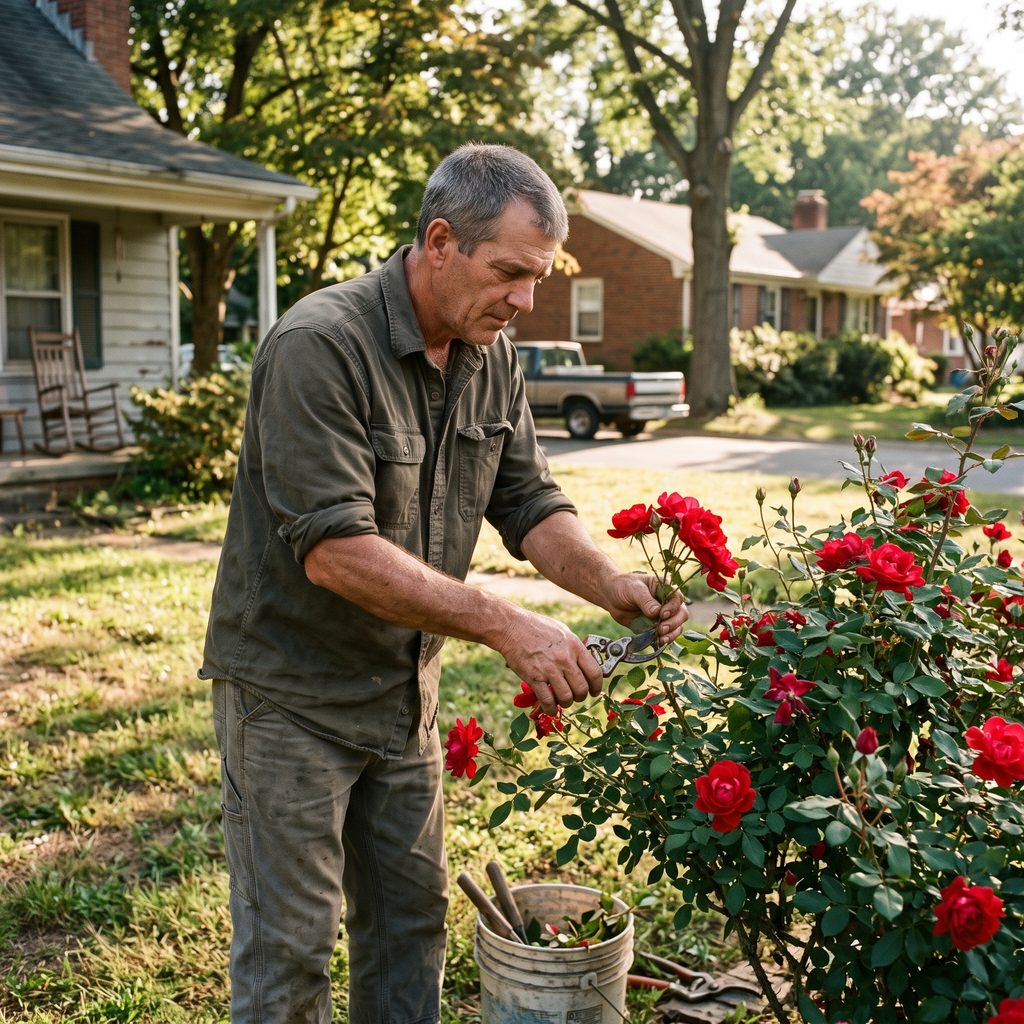
For twenty years, I had been the quiet man everyone in the neighborhood trusted. I mowed lawns, repaired broken bicycles, tended my roses, and never raised my voice. My neighbors knew me as John Vance, the retired gardener who preferred a peaceful afternoon to an argument.
They had no idea who I used to be.
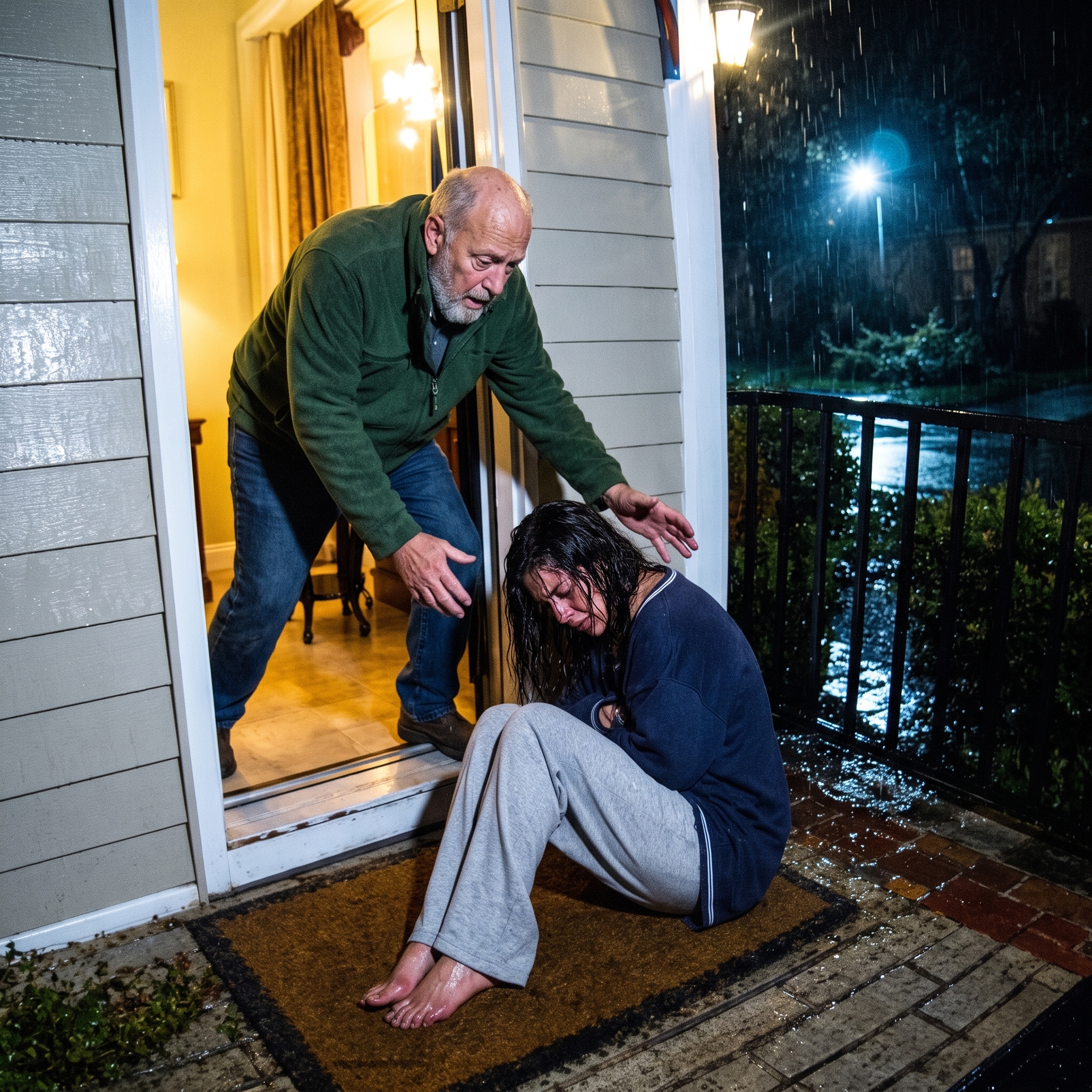
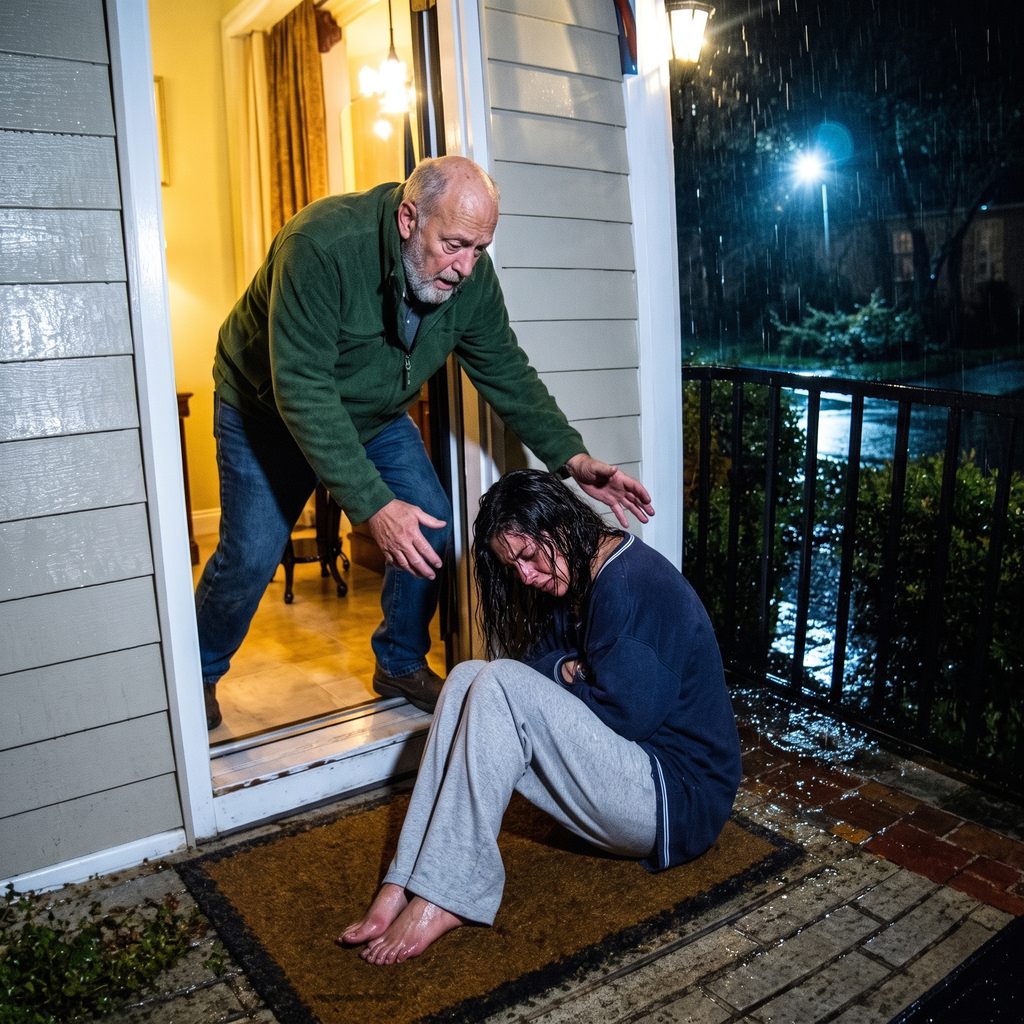
Then, one stormy night, someone knocked on my door. When I opened it, my daughter was lying on the welcome mat, soaked in rain, trembling with pain, and barely recognizable.
In that moment, the peaceful life I had spent two decades building came to an end.
My name is John Vance. I live at number 42 Maple Street, in a quiet Virginia neighborhood where people wave from their driveways and complain about property taxes over their garden fences.
I liked it that way.
Every Tuesday morning, I mowed my lawn. On weekends, I trimmed the rose bushes along my front walk. When children from the neighborhood brought me broken bicycles, I fixed them in my garage and sent them home with a smile.
Nobody asked many questions about my past.
I had learned that people were usually satisfied with whatever explanation made them comfortable.
Retirement, I told them, had been good to me. I enjoyed gardening. I preferred silence. I had no interest in getting involved in other people’s business.
All of that was true.
But it wasn’t the whole truth.
Before becoming the quiet neighbor, I had served in the military. I had spent years in dangerous places, making difficult decisions under circumstances most people could barely imagine. I had learned how to remain calm when others panicked, how to recognize danger before it became obvious, and how to keep moving when fear threatened to take control.
Eventually, I came home.
I left that life behind because I wanted something ordinary. I wanted mornings without alarms, evenings without nightmares, and a house where the loudest sound was rain against the windows.
Most of all, I wanted my daughter, Lily, to grow up believing that the world could be kind.
Lily was the best thing that had ever happened to me. After her mother died, the two of us became a family of our own. I taught her to ride a bicycle, helped her with school projects, and sat beside her whenever life seemed too difficult to understand.
As she grew older, I tried to give her the freedom to make her own choices.
That included the choice to marry Mark Sterling.
Mark was wealthy, charming, and successful. He owned a real estate development company and lived in a glass-and-stone mansion on a hill overlooking the town. When he first met me, he shook my hand firmly, looked me in the eye, and promised he would always take care of Lily.
I wanted to believe him.
At first, Lily seemed happy. She visited on Sundays, brought me flowers, and told me stories about the renovations they were making to their home.
Then the visits became less frequent.
Her cheerful phone calls turned into short messages. When I asked whether everything was all right, she always said the same thing.
“Everything’s fine, Dad. I’m just busy.”
Sometimes, I heard Mark speaking in the background. His voice was sharp, impatient, and controlling. Lily would suddenly become quiet.
I noticed, but I didn’t want to interfere without understanding what was happening.
I told myself she was an adult. I told myself that marriage required adjustment. I told myself that if she needed me, she would ask.
Those excuses would haunt me later.
The night everything changed, rain battered the windows of my little bungalow. I was in the kitchen preparing tea when I heard a sound from the front porch.
At first, I thought it was a branch scraping against the door.
Then I heard it again.
A weak, desperate whimper.
I put down my cup and walked toward the entrance. When I opened the door, a woman was curled on the welcome mat, shivering beneath the porch light.
Her nightclothes were soaked. Her hair clung to her face, and there was blood near her forehead.
“Dad,” she whispered.
I dropped to my knees.
“Lily?”
Her left eye was swollen. Her lower lip was split, and dark bruises marked her neck. She tried to sit up, but pain forced her back down.
I gathered her carefully into my arms and carried her inside.
For a moment, the room seemed to shrink around us. All I could see was my little girl, the child who had once run into my arms after falling off her bicycle, now struggling to breathe without hurting.
I called emergency services and followed the dispatcher’s instructions while keeping her warm. When the ambulance arrived, the paramedics took over and rushed her to the hospital.
I rode beside her.
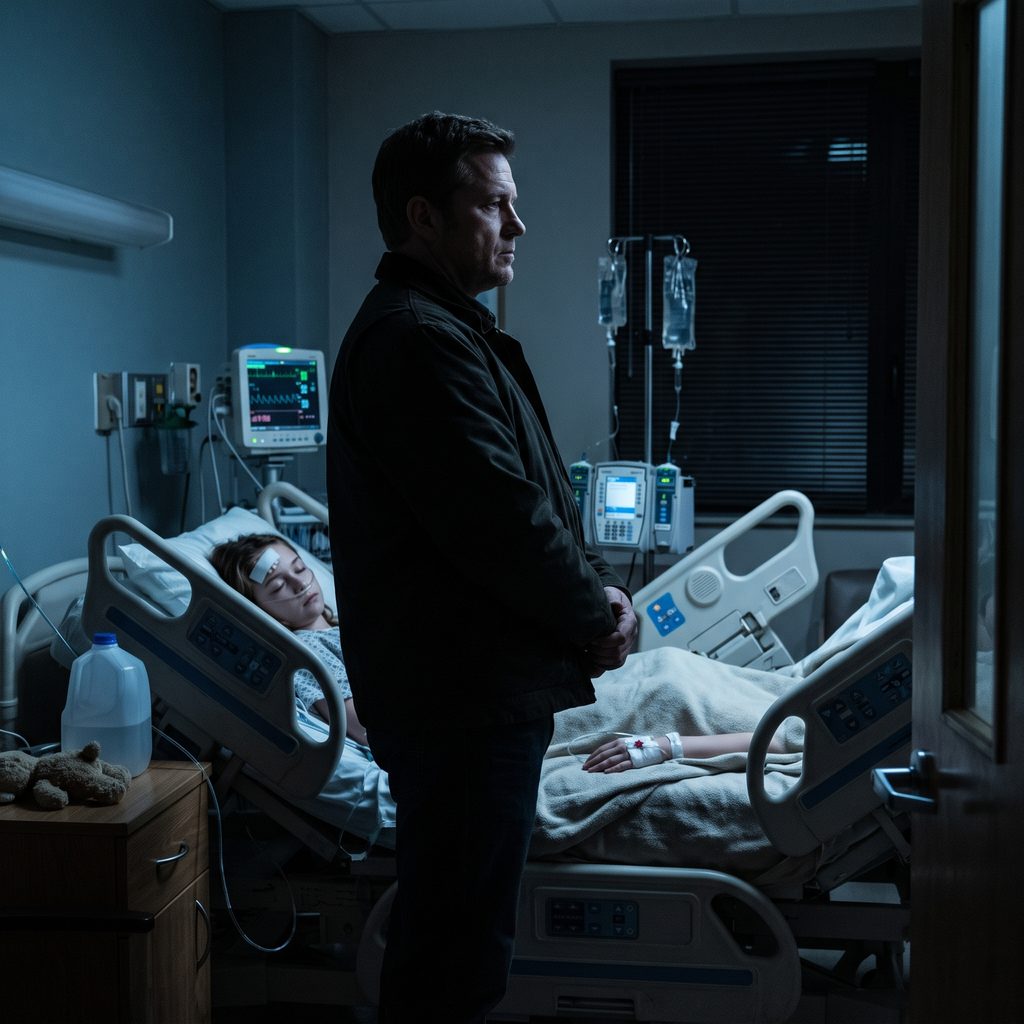
At the hospital, doctors examined her and ordered scans. Two of her ribs were fractured, she had a concussion, and her throat showed signs of severe pressure.
I stood beside her bed, listening to the monitors and watching her sleep.
When she finally opened her eyes, she looked toward the door before looking at me.
“Is he here?”
“No, sweetheart. You’re safe.”
She swallowed painfully.
“It was Mark.”
I felt the muscles in my jaw tighten.
“What happened?”
“He came home drunk. We argued about money. He said I embarrassed him in front of his business partners.” Her voice broke. “Then he pushed me down the stairs.”
I kept my expression calm because I knew she needed her father, not another frightened person in the room.
“He told me nobody would believe me,” she continued. “He said he could make you disappear, too. He said you’re just an old man who spends his days cutting grass.”
She began to cry.
I held her hand.
“Listen to me, Lily. You don’t have to go back there. You don’t have to decide anything tonight. We’re going to get you the help you need.”
She looked at me with the frightened eyes of a child.
“Promise me you won’t do anything stupid.”
I hesitated.
“Promise me, Dad.”
“I promise I’ll think before I act.”
It wasn’t quite what she had asked, but it was the only answer I could give honestly.
After the doctors had stabilized her, I spoke with the police and provided the information I knew. I wanted Mark held accountable through evidence, witnesses, and the law. I also knew that money could complicate everything.
Mark was not simply a wealthy husband. He was a man accustomed to making problems disappear.
As I left the hospital, my phone vibrated.
A message from an unfamiliar number appeared on the screen.
Tell Lily to come home. This is a family matter. Stay out of it, old man.
A second message followed.
You have no idea who you’re dealing with.
I stared at the words until the screen dimmed.
Then I looked toward the hospital entrance, where Lily was being transferred to a protected room.
For twenty years, I had worked to keep the soldier inside me buried beneath ordinary routines and quiet mornings.
Now, someone had threatened my daughter and believed I would simply look away.
He had mistaken my peaceful life for weakness.
And before that night was over, I would discover just how far he was willing to go to make sure nobody ever challenged him.
Part 2: The Night Mark Sterling Made His Biggest Mistake
I did not drive straight to Mark’s mansion.
For the first time in years, I understood how dangerous anger could be. It narrowed the world until a person could see only the thing they wanted to destroy.
That was precisely why I needed to think clearly.
I returned home, changed out of my rain-soaked clothes, and called the detective handling Lily’s case. I told him about the threatening messages and asked how to preserve them as evidence.
He instructed me not to confront Mark and arranged for an officer to speak with Lily when she was ready.
I agreed.
Then I sat at my kitchen table, staring at a photograph of Lily as a little girl.
She was eight in that picture, standing beside her first bicycle. Her front teeth were uneven, her knees were scraped, and her smile was so wide that her eyes had nearly disappeared.
I remembered how proud she had been when she finally learned to ride without training wheels.
“Don’t let go, Daddy!” she had shouted.
“I’m right here,” I had answered.
I had kept that promise through scraped knees, schoolyard disappointments, and the painful years after her mother died.
But somewhere along the way, I had mistaken giving my daughter independence for staying silent when something was wrong.
I would not make that mistake again.
The following morning, I met Lily at the hospital. She was awake, exhausted, and frightened about what might happen if she reported her husband.
“Mark knows people,” she told me. “His lawyer knows people. Everyone thinks he’s wonderful.”
“That doesn’t mean they can erase what happened.”
“He’ll say I fell. He’ll say I’m unstable. He’ll say anything.”
“Then we’ll tell the truth and let the evidence speak.”
She turned toward the window.
“I should have told you sooner.”
I squeezed her hand.
“You don’t owe me an explanation for being afraid.”
That finally broke through the wall she had built around herself. She cried for several minutes, apologizing for every missed visit and every unanswered question.
I told her there was nothing to forgive.
The first steps were difficult. Lily agreed to speak with investigators and receive support from a domestic violence advocate. She also authorized the hospital to document her injuries for the investigation.
The detective warned us that the case would take time.
Mark, meanwhile, had already begun protecting himself.
By the end of the day, his attorney had contacted the police. According to the message relayed to us, Mark claimed Lily had attacked him during an argument and then left their home in a state of emotional distress.
It was a lie, but a carefully constructed one.
Mark understood that the first version of a story could shape how people perceived everything that followed.
Two days later, I received a call from a number I recognized.
Mark.
I answered but said nothing.
“John,” he began, sounding almost cheerful. “I’m glad you picked up. I think we need to clear up a misunderstanding.”
“You can speak to the detective.”
He laughed softly.
“Come on. We’re family. Lily has always been emotional. You know that. Things got out of hand, and now everyone’s acting like I’m some kind of monster.”
“She has fractured ribs.”
“She fell.”
“She told me what happened.”
A pause followed.
Then his voice hardened.
“You should be careful about believing everything she says. You don’t know what she’s capable of.”
I gripped the phone.
“Is that a threat?”
“It’s advice. You have a comfortable little life, John. A nice house. Neighbors who like you. It would be a shame if all that became complicated because you decided to involve yourself in something you don’t understand.”
I ended the call and saved the recording of the voicemail he had left before I answered. I forwarded the relevant material to the detective.
That evening, I learned that Mark had contacted several people in the neighborhood, suggesting that I had become unstable since retirement.
The old version of me might have found that amusing.
The new version understood what he was doing.
He was preparing the ground for a counterattack.
Three nights after Lily arrived at my house, I found a folded note tucked beneath my front door.
You have until tomorrow to convince your daughter to withdraw her statement.
There was no signature.
I photographed the note, contacted the police, and followed their instructions. An officer came to the house and documented the incident.
I should have left everything there.
Instead, I made a decision that would complicate the next several weeks of my life.
I wanted to look Mark in the eye and hear him explain himself without the protection of a telephone or a lawyer.
I wanted him to understand that Lily was no longer alone.
Before leaving, I called my old friend William Halloway. Bill had been a judge in the county for years, but our friendship went back much further. We had met through community service after my retirement, and over time, Sunday chess games had become a tradition.
I explained what was happening.
“John,” he said carefully, “I can tell you what the process looks like. I cannot become involved in the investigation, and I certainly cannot promise you an outcome.”
“I understand.”
“And I want you to stay away from that man.”
“I understand that, too.”
There was a long silence.
“Do you?” Bill asked.
I didn’t answer.
That night, I drove to Mark’s mansion.
Rain swept across the road as I turned onto the long driveway. The house stood above the town, its enormous windows shining against the darkness.
I parked near the entrance and remained in the truck for several minutes.
I was not there to deliver a beating. I was there because I wanted answers, and because some stubborn part of me believed that looking a bully in the eye might force him to recognize the damage he had caused.
It was a foolish hope.
Mark opened the door holding a glass of whiskey. His white shirt was unbuttoned at the collar, and his expression changed from surprise to contempt when he saw me.
“Well, look who decided to visit.”
“I want you to stop contacting Lily.”
He smiled.
“Does she send you to do all her talking now?”
“She has made her statement. The police are investigating. You need to leave her alone.”
Mark stepped onto the porch.
“You really think you can tell me what to do in my own house?”
“No. I’m telling you what needs to happen if you want this situation to get any worse.”
He laughed.
“You’re an old gardener, John. You spend your days trimming bushes and fixing children’s bicycles. What exactly do you think you’re going to do?”
“I think you should step back inside and call your lawyer.”
His smile vanished.
He moved closer and jabbed a finger into my chest.
“Your daughter belongs to me.”
“No,” I said. “She doesn’t.”
For a second, neither of us moved.
Then Mark shoved me hard enough to send me stumbling against the porch railing.
I steadied myself.
“Don’t touch me again.”
He swung at my face.
I turned away, but his fist caught my cheek, splitting the skin.
Pain flashed across my face. Somewhere above us, a security camera blinked in the rain.
Mark stared at the blood on his knuckles and began to grin.
“Now look what you made me do.”
I touched my cheek and looked directly at him.
“You struck me.”
“You came to my house!”
“I came here to tell you to leave my daughter alone.”
He raised his fist again.
And as he stepped toward me, I realized that he had no intention of listening to a single word I said.
The confrontation I had hoped to avoid had begun.
And whatever happened next would follow both of us long after the rain stopped.
Part 3: The Secret Mark Never Expected to Discover

Mark swung again, but this time I stepped out of his reach.
He stumbled forward, nearly losing his balance on the wet stone. His expression twisted with humiliation.
“Stand still!” he shouted.
I moved toward the driveway, putting distance between us.
“That’s enough, Mark. I’m leaving.”
He looked almost offended by the idea.
“You’re not going anywhere until I’m finished with you.”
He reached for my jacket and tried to pull me back. I broke his grip and pushed his hand away. He charged again, throwing a clumsy punch that missed my face and struck the doorframe.
His anger had made him reckless.
Mine was threatening to do the same.
For one dangerous second, the old instincts returned. I remembered years when hesitation could cost lives, when physical confrontation was sometimes unavoidable, and when the difference between surviving and losing control depended on a person’s ability to think under pressure.
But I was no longer on a battlefield.
I was an older man standing outside a wealthy man’s house, and every decision I made could affect my daughter’s future.
“Back away,” I warned.
Mark answered by lunging at me again.
We struggled on the porch. He caught my jacket, and I lost my footing against the railing. I managed to break free, but he followed me down the steps.
Then he slipped.
His leg twisted beneath him as he fell hard onto the wet paving stones.
He screamed and grabbed his knee.
For a moment, I stood motionless, breathing heavily.
Mark looked up at me, his face pale with pain.
“Help me!”
I could have walked away.
Instead, I called emergency services.
While waiting for the ambulance, I stepped back and kept my distance. Mark continued shouting insults, threatening lawsuits, and promising that he would destroy me.
I said nothing.
When the police arrived, I explained what had happened. I showed them the cut on my cheek and pointed out the security camera above the door.
Mark insisted that I had come to attack him. I told the officers that he had struck me first and that we had struggled afterward.
They separated us, took statements, and arranged medical assistance.
I was arrested that night.
The charges were serious. Mark’s injuries, combined with his account of the confrontation, gave his lawyer an opportunity to portray me as a dangerous intruder who had deliberately attacked a defenseless homeowner.
At the station, I asked to contact my lawyer and requested that the officers document my injuries. I also told them about the earlier threats, the note beneath my door, and the investigation into Lily’s abuse.
The next morning, I was released under conditions while the case proceeded.
Lily was waiting when I returned home.
She looked at the cut on my face and began crying.
“What happened?”
I sat beside her and explained the confrontation without hiding my own mistakes.
“You went there,” she whispered.
“Yes.”
“You promised me you wouldn’t do anything stupid.”
“I know.”
She looked away.
“I was scared he’d hurt you.”
I took her hand.
“I’m sorry. I thought I could make him understand that he couldn’t intimidate us. I should have listened to the people who told me to stay away.”
For the first time since her arrival, she looked angry rather than frightened.
“You can’t protect me by getting yourself hurt.”
Her words landed harder than anything Mark had said.
She was right.
Protecting Lily did not mean taking every danger onto my own shoulders. It meant helping her regain control over her own life, supporting her decisions, and allowing the law to address what had happened.
Over the following weeks, our situation became more complicated.
Mark’s legal team filed additional accusations against me. They described him as a businessman attacked in his own home by a retired military man who had lost control.
The local rumor mill did the rest.
Some neighbors stopped speaking to me. Others asked awkward questions when I went to the grocery store. A few people continued bringing their bicycles to my garage, although they seemed unsure whether to knock.
I tried not to take it personally.
Mark had money, influence, and a polished public image. He had spent years building relationships with people who benefited from believing him.
But his lawyers had overlooked something important.
Lily was no longer afraid to tell her story.
She met regularly with investigators and a domestic violence advocate. She provided photographs of her injuries, medical records, and messages documenting Mark’s threats and controlling behavior.
She also told them about incidents she had hidden for years.
There had been arguments over money. There had been threats to cut her off from friends. There had been occasions when Mark took her phone, monitored her movements, or insisted that disagreements were proof she was an ungrateful wife.
Each incident had seemed easier to explain away than to confront.
Together, however, they revealed a pattern.
The detective began examining the evidence more closely.
Then came a discovery that changed the direction of the investigation.
During a review of the records surrounding the incident at Mark’s mansion, investigators learned that a responding officer’s body camera had captured part of Mark’s conversation with police.
According to the officer’s report, Mark had smelled strongly of alcohol and had referred to the incident with a remark suggesting he had been trying to teach Lily a lesson.
His attorney disputed the interpretation, but the recording gave investigators a reason to examine his account more carefully.
There was another development.
The security system at Mark’s house had stored footage on an external server. Although Mark had apparently deleted the local recording, investigators were able to seek access to the backup through the appropriate legal process.
The footage showed part of the confrontation on the porch.
It did not answer every question, but it challenged the claim that I had attacked Mark without warning.
My lawyer told me that the evidence could help my defense, although the outcome remained uncertain.
“Don’t assume one recording solves everything,” she warned. “The court will consider the entire incident, including what happened after the first contact.”
I understood.
I had gone to Mark’s house against advice. I had put myself in a dangerous position, and I could not pretend that my choices were irrelevant.
Then another piece of information emerged.
Mark’s attorney had contacted witnesses who were prepared to describe me as aggressive and unstable. Some had never seen me behave that way. Others knew Mark socially or professionally.
But one of the people approached by the defense had worked in the neighborhood for years.
She was an elderly woman named Margaret Ellis, who lived two houses down from me.
Margaret had watched Lily grow up. She had seen her visit less frequently after her marriage, and she had noticed the fear in her face during the few visits she made.
When investigators interviewed her, she described what she had observed without exaggeration.
She could not say what had happened behind Mark’s closed doors.
But she could say that Lily had changed.
Other neighbors began sharing their own observations. One remembered hearing Mark shout at Lily in their driveway. Another had seen Lily arrive at my house with a bruise months earlier, although she had insisted that she had fallen.
These accounts did not automatically establish what had happened inside the marriage. They did, however, give investigators additional leads to examine.
The case was becoming larger than Mark’s version of a single argument.
Then I received a letter from his lawyer.
It demanded that I stop discussing the incident and warned that further statements could expose me to additional legal action.
I handed it to my attorney.
“Let them send letters,” she said. “We will respond through the proper channels.”
For the first time in weeks, I felt that I did not have to carry the entire burden alone.
But the greatest change was happening inside my daughter.
Lily began making plans that had nothing to do with Mark.
She spoke about returning to work. She met with a counselor. She started choosing what to wear without asking whether he would approve.
One afternoon, I found her sitting in the garden beside the roses.
“Do you think I’ll ever feel normal again?” she asked.
I sat beside her.
“I think you’ll discover a new version of normal. It may take time, and it may look different from what you expected.”
She studied the flowers.
“I thought marrying him meant I had finally built a life of my own.”
“You did build a life. Then someone tried to make you believe it belonged to him.”
She rested her head against my shoulder.
For a long time, we sat without speaking.
I had spent years believing that my greatest responsibility was keeping danger away from my family. Now I understood that real protection required more than strength.
It required patience, honesty, and the courage to let another person decide what healing should look like.
Several weeks later, my attorney called.
“The preliminary hearing is scheduled,” she said. “And there’s a development you need to understand.”
I sat down.
“What development?”
“The prosecution has reviewed the new evidence. They are considering additional charges against Mark in connection with Lily’s injuries.”
I closed my eyes.
For months, he had acted as though money could buy him silence and influence could rewrite reality.
Now, for the first time, he faced the possibility that his own words and actions would become the evidence against him.
But there was still a long road ahead.
And in a courthouse where Mark’s family had connections and my own future remained uncertain, nothing was guaranteed.
Part 4: The Courtroom Where the Truth Finally Spoke
The courthouse was crowded on the morning of my hearing.
Mark arrived in a wheelchair, his injured leg secured in a cast. His lawyer walked beside him in an expensive suit, carrying a thick folder and wearing the expression of a man who expected the room to follow his lead.
Mark looked different from the man who had stood on his porch during the storm.
The confidence remained, but it had become something brittle.
When he noticed me, he smiled faintly.
It was the same smile he had worn when he threatened my family, as though he still believed the outcome had already been decided.
My attorney, Sarah Mitchell, sat beside me.
“Don’t react to him,” she whispered. “Let the evidence do its work.”
The hearing began with the prosecution outlining the allegations against me. The state argued that I had gone to Mark’s home during the night and participated in a violent confrontation that left him seriously injured.
My attorney did not deny that I had gone there.
Instead, she explained the context, the threats that preceded the incident, and the evidence suggesting that Mark had initiated the physical confrontation.
The court heard testimony about the injuries I had sustained and reviewed the available security footage.
The recording was imperfect. Rain obscured parts of the scene, and the camera did not capture every movement clearly. Nevertheless, it provided a timeline that contradicted important portions of Mark’s account.
The responding officer testified about the statements made at the scene. The court also heard how the earlier threats had been reported and documented.
Then the prosecution introduced information concerning Lily’s injuries.
Her medical records showed that she had suffered significant trauma before arriving at my home. Her testimony, supported by the documented injuries and other evidence, described the abuse she said she had endured during her marriage.
Mark’s lawyer objected repeatedly.
He questioned her memory, her motives, and the timing of her disclosure.
Lily remained seated, gripping her hands together beneath the table.
I wanted to stand up. I wanted to tell the room what I had watched my daughter endure.
But I stayed in my seat.
This was her testimony, her experience, and her opportunity to speak.
She did not need me to take her voice away in the name of defending her.
When the questioning ended, she looked toward me.
I nodded.
She gave me the smallest smile.
The judge then addressed the evidence concerning my own case.
He made it clear that the court would not treat a person’s military background as proof of guilt, nor would it assume that being an older homeowner made someone incapable of violence.
The facts had to be considered carefully.
My attorney argued that I had been threatened and struck, and that my actions had to be evaluated in the context of the confrontation rather than through Mark’s preferred version of events.
The prosecution acknowledged that the available evidence raised substantial questions about the initial accusations.
After reviewing the material and hearing the arguments, the court dismissed the most serious allegations against me at that stage of the proceedings, finding the evidence insufficient to sustain them as charged.
It was not a declaration that every decision I had made that night was wise.
It was a recognition that the evidence did not support the story Mark’s side had presented.
I felt my shoulders loosen for the first time in weeks.
Then the judge turned to the separate allegations involving Mark.
Before addressing those matters, he disclosed that he had a longstanding personal friendship with me and with Lily. He explained that he could not preside over any contested criminal proceedings against Mark without creating a serious question about impartiality.
Mark’s attorney immediately stood.
“Your Honor, we request that the entire matter be dismissed.”
The judge shook his head.
“That is not the consequence of a disclosed conflict. The appropriate course is to refer the matter for assignment to a different judge.”
He ordered the relevant material forwarded through the proper channels and made no finding of guilt against Mark.
For once, Mark seemed unable to find a suitable response.
He had expected the courtroom to become a stage on which he could portray himself as the victim and me as the villain.
Instead, the proceedings had revealed the limits of that performance.
Outside the courtroom, reporters waited near the entrance. Mark’s lawyer hurried him toward a private exit, while Sarah guided Lily and me in the opposite direction.
Lily stopped on the courthouse steps.
“It’s over for today,” she said quietly.
“For today,” I agreed.
She took a deep breath.
“I thought I’d feel happier.”
“You’ve been carrying this for a long time. You don’t have to feel anything in particular.”
She looked at the sunlight falling across the pavement.
“I’m glad I told the truth.”
“So am I.”
The criminal investigation continued over the following months.
The evidence concerning Lily’s injuries was reviewed separately from the allegations arising out of the confrontation at Mark’s house. Investigators considered the medical records, witness statements, messages, and the officer’s recording.
The process was slower than any of us wanted.
There were meetings with lawyers, additional interviews, and difficult days when Lily wondered whether speaking up had made her life harder.
Whenever she felt overwhelmed, we reminded ourselves that the process had to be based on evidence, not revenge.
Eventually, the district attorney announced criminal charges against Mark related to the alleged abuse. The case proceeded through the legal system, and a different judge was assigned.
Mark pleaded not guilty.
During the proceedings, the prosecution presented the evidence it had gathered, including Lily’s testimony and the medical documentation. The defense challenged portions of the account, as it was entitled to do.
Lily answered the questions as honestly as she could.
She did not pretend to remember every detail perfectly. She did not exaggerate. She described what had happened, what she had feared, and why she had remained silent for so long.
Her honesty made her testimony powerful.
The jury ultimately found Mark guilty of the offenses established at trial. The court imposed a substantial prison sentence, reflecting the seriousness of the crimes proven in court.
The verdict did not erase what Lily had experienced. It did not restore the years she had spent living in fear.
But it meant that Mark could no longer rely on wealth and reputation alone to escape accountability.
The civil divorce proceedings followed. With legal assistance, Lily pursued a fair settlement and began separating her finances and future from her former husband.
She moved into a small apartment near her workplace. The rooms were modest, and the furniture was secondhand, but every decision belonged to her.
One afternoon, I helped her carry a box of books into the apartment.
She looked around the living room.
“It’s not much,” she said.
I set the box beside the window.
“It’s yours.”
She smiled.
“That’s why I like it.”
In the months that followed, Lily gradually returned to the things she loved. She began visiting friends again. She planted herbs on her balcony and signed up for a class she had wanted to take before her marriage.
Some days were still difficult. Healing did not follow a straight line, and there were moments when a sound, a memory, or an unexpected reminder brought the fear back.
She learned to recognize those moments without allowing them to define her future.
I learned something, too.
For years, I had thought of myself as a protector. I believed that if I remained strong enough, alert enough, and prepared enough, I could keep everyone I loved safe.
But the truth was more complicated.
I could support my daughter. I could stand beside her. I could help her find resources, listen without judgment, and make sure she knew she had choices.
I could not make every decision for her, and I could not erase the past.
Most importantly, I could not let anger convince me that violence was the only language a cruel person understood.
My confrontation with Mark had created risks for both of us. The evidence and legal process—not my desire to punish him—had ultimately determined the outcome.
I would always regret going to his house that night.
I would never regret opening my door when Lily came home.
One spring morning, nearly a year after the storm, I was trimming the roses when Lily arrived carrying two cups of coffee.
She stood at the gate and watched me work.
“You’re still doing that every Tuesday?”
“Some traditions are difficult to break.”
She laughed.
It was a real laugh, light and unguarded, and hearing it made the years of worry feel a little less heavy.
We sat on the porch together, drinking coffee while the neighborhood slowly woke around us.
A child rode past on a bicycle. Somewhere down the street, a lawn mower started. The roses were beginning to bloom.
It was an ordinary morning.
For a long time, I had thought ordinary mornings were something I needed to defend against the world.
Now I understood that they were something we could build again, one decision at a time.
My neighbors still knew me as the quiet man at number 42. I still repaired bicycles, watered the roses, and waved when people passed.
I didn’t need them to know every detail of my past.
I didn’t need to prove that I was stronger than the man who had hurt my daughter.
What mattered was that Lily could finally live without asking permission to breathe.
Before she left that afternoon, she hugged me.
“Thank you for believing me,” she whispered.
I held her close.
“You never had to earn that, sweetheart.”
After she drove away, I returned to the garden.
The roses were opening in the sunlight, their petals delicate and bright after months of rain and cold.
I thought about the man I had been before retirement, the father I had tried to become, and the mistakes I had made when fear and anger collided.
I had learned that courage was not always loud. Sometimes it was a person telling the truth after years of silence. Sometimes it was asking for help. Sometimes it was walking away from a fight and trusting the evidence to speak.
And sometimes, it was simply opening the door.
For twenty years, I had been the quiet neighbor who mowed lawns and never raised his voice.
I still was.
But now, when I looked at my peaceful little home, I understood that its greatest strength had never been the man living inside it.
It was the fact that the door remained open to the people who needed somewhere safe to begin again.
