I Adopted the Girl Everyone Blamed for My Daughter’s Disappearance—Ten Years Later, She Brought Her Home
Part 1: The Girl Everyone Blamed
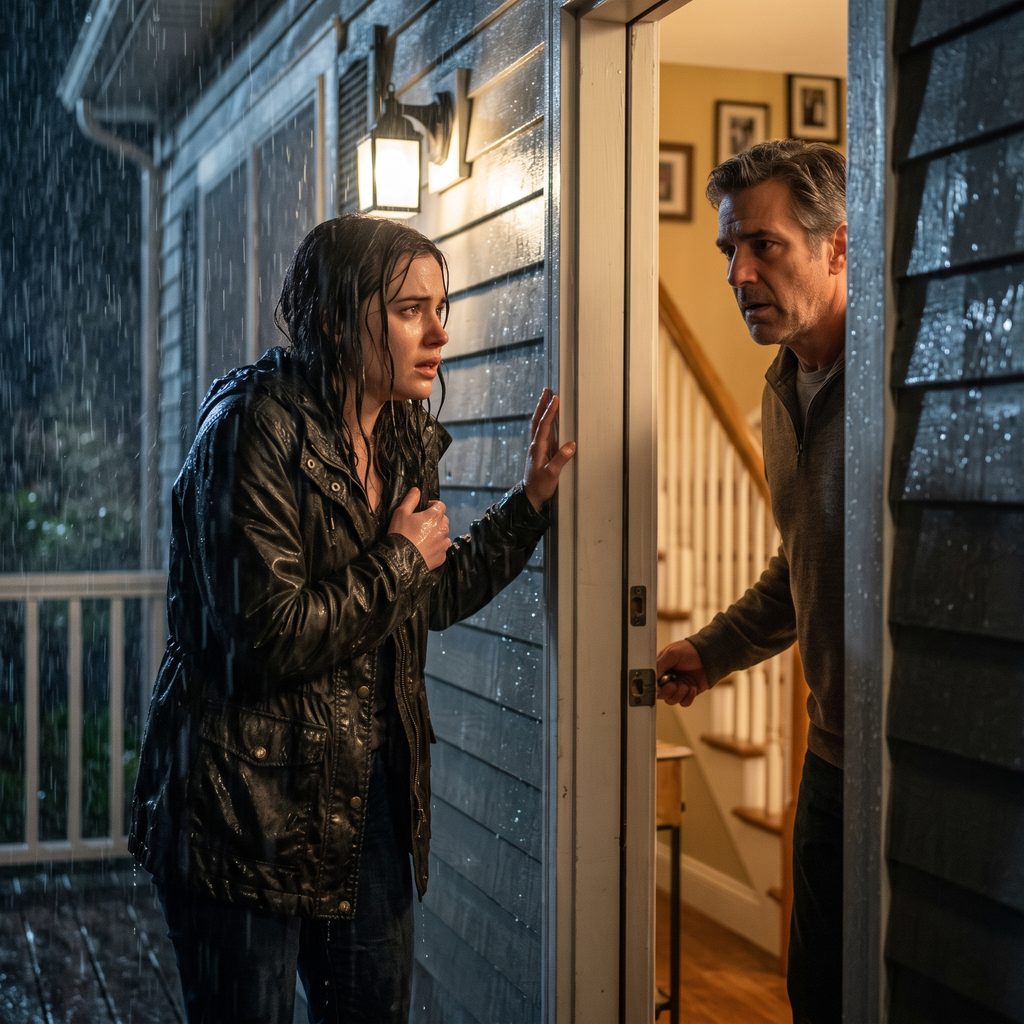
For ten years, I kept my missing daughter’s bedroom exactly as she had left it. I never imagined that the little girl I had adopted after her disappearance would one day stand in my doorway, trembling beneath the rain, and tell me that everything I believed about that terrible night was wrong.
“Dad,” Nora whispered, her voice barely audible over the storm, “there’s something I should have told you a long time ago.”
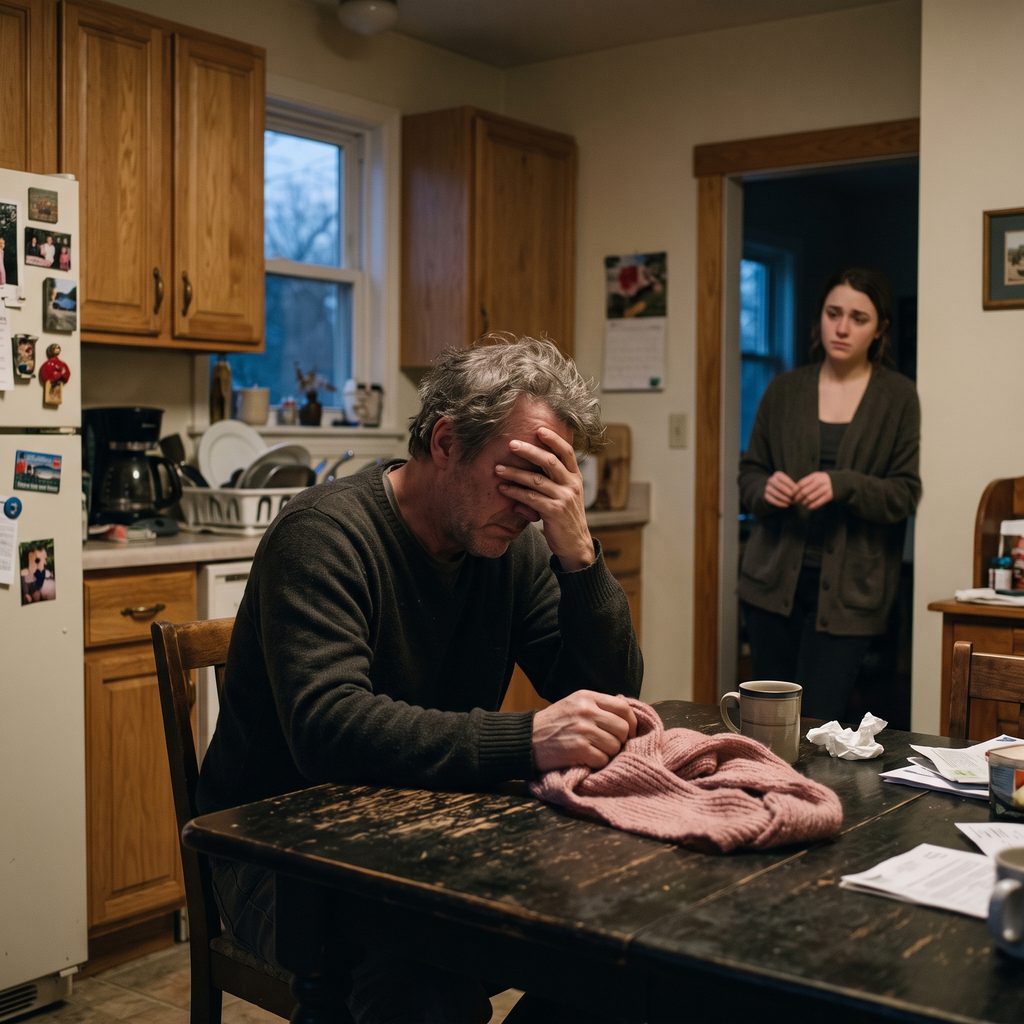
I was sitting at the kitchen table, holding Emily’s faded pink scarf. Every year, on the anniversary of her disappearance, I took it from the drawer and remembered the daughter I had failed to bring home.
Then Nora looked toward the front door.
“Please promise you won’t hate me when you see who’s outside.”
My heart began to pound.
Before I tell you what happened that night, you need to understand how we arrived at that moment—and why an entire town had spent a decade blaming the wrong person.
The night my world fell apart
My name is Daniel, and I had never imagined raising a child alone.
My wife, Abigail, died several years before Emily disappeared. After the funeral, our house became painfully quiet. Emily was only nine, and I did my best to make sure she never felt that her mother’s absence meant she had lost her entire family.
I worked long hours, burned more dinners than I cared to admit, and sometimes forgot school events. But every night, I checked her bedroom before going to sleep.
She was my daughter, my reason to keep moving, and the person who made our house feel like a home.
Emily had a best friend named Nora. Nora had lost both parents when she was young and lived with her elderly grandmother, whose memory was gradually deteriorating.
The girls were inseparable.
Nora often joined us for dinner. She helped Emily with homework, laughed at her terrible jokes, and sometimes stayed late enough that I drove her home myself.
“Dad,” Emily once told me, “Nora is basically my sister.”
I smiled.
“Then she’d better stop stealing the last cookie.”
Nora blushed, Emily burst out laughing, and for a few minutes, our little family felt whole again.
But not everyone approved of our closeness.
Emily’s maternal grandparents, Grant and Helen, believed their granddaughter should spend more time with them. They frequently criticized my parenting, suggesting that a widowed father could never provide the stability a growing girl needed.
“She needs her mother’s family,” Grant reminded me during one uncomfortable visit.
“She has a family,” I replied. “She has me.”
He looked at me with an expression I could never quite understand.
“You can’t protect her from everything, Daniel.”
I thought he was simply being condescending. I never imagined those words would haunt me for years.
The argument that changed everything
The night Emily disappeared was a rainy Friday in October.
She wanted to attend a school dance with Nora. I had checked the weather forecast, and the storm was getting worse. Worried about the roads, I told her she had to stay home.
Emily argued. I refused.
What should have been a small disagreement quickly became something much bigger.
“You never let me do anything!” she shouted.
“That’s not true. I’m trying to keep you safe.”
“You always think you know everything!”
I was exhausted from work and still struggling with the loneliness that followed Abigail’s death. Instead of taking a breath, I said the cruelest thing that came to mind.
“Maybe you should ask your grandparents to raise you if you think they know better than I do.”
The moment the words left my mouth, I regretted them.
Emily stared at me, tears gathering in her eyes.
Then she grabbed her coat and ran outside.
“Nora!” she called from the porch.
Her friend had been waiting nearby. She immediately followed Emily into the rain.
“I’ll bring her home,” Nora promised.
I watched them disappear down the street.
I expected them to return within minutes, angry but safe. I imagined apologizing over hot chocolate and telling Emily that I loved her more than any argument could ever change.
Half an hour passed.
Then another ten minutes.
Finally, the front door opened.
Nora stood on the porch alone, soaked to the skin, her hair tangled across her face. Mud covered her shoes, and her hands were shaking.
“Where’s Emily?” I demanded.
Nora looked at me as if she had seen something terrible.
“I don’t know.”
I grabbed my keys and called the police.
Within minutes, officers were searching the neighborhood. They checked the nearby woods, walked along the river, and knocked on doors throughout the town.
No one had seen Emily.
By midnight, the rain had weakened, but my fear had become unbearable.
I sat beneath the harsh lights of the police station while an officer asked Nora to explain what had happened.
She repeated the same words.
They had argued. Emily had walked away. Nora had lost sight of her.
She couldn’t tell them where Emily had gone.
The following morning, the town woke to the news that my daughter was missing.
And because Nora had been the last person seen with her, people immediately began asking whether she was hiding something.
The accusation that followed Nora home
At first, the questions seemed reasonable. Everyone wanted to know what had happened to Emily.
But curiosity soon became suspicion.
Some neighbors whispered that Nora must have known more than she admitted. Other people openly accused her of lying. Someone painted the word LIAR across our mailbox.
Nora stopped going outside unless she had to.
One afternoon, I found her sitting on the stairs with a packed backpack beside her.
“I should leave,” she whispered.
I looked at the frightened child in front of me.
“Why?”
“Because everybody thinks I did something to Emily. They look at me like I’m a monster.”
“Did you hurt her?”
She shook her head so quickly that tears spilled down her cheeks.
“No, Daniel. I swear I didn’t.”
I believed that she was frightened. I wanted to believe that she was innocent, too.
But I was Emily’s father. Every unanswered question felt like another wound, and part of me wondered whether Nora was keeping something from me.
Then her grandmother’s condition worsened. She could no longer care for Nora safely, and social services began discussing foster placement.
I could not bear the thought of another child losing the only home she knew.
Emily had loved Nora like a sister. Sending her away felt like abandoning the last living connection I had to my daughter.
So I became Nora’s guardian.
Eventually, I adopted her.
The town criticized me for it. Some people said I was replacing Emily. Others believed I had made a terrible mistake by trusting the girl they blamed for her disappearance.
They did not understand that I wasn’t trying to replace anyone.
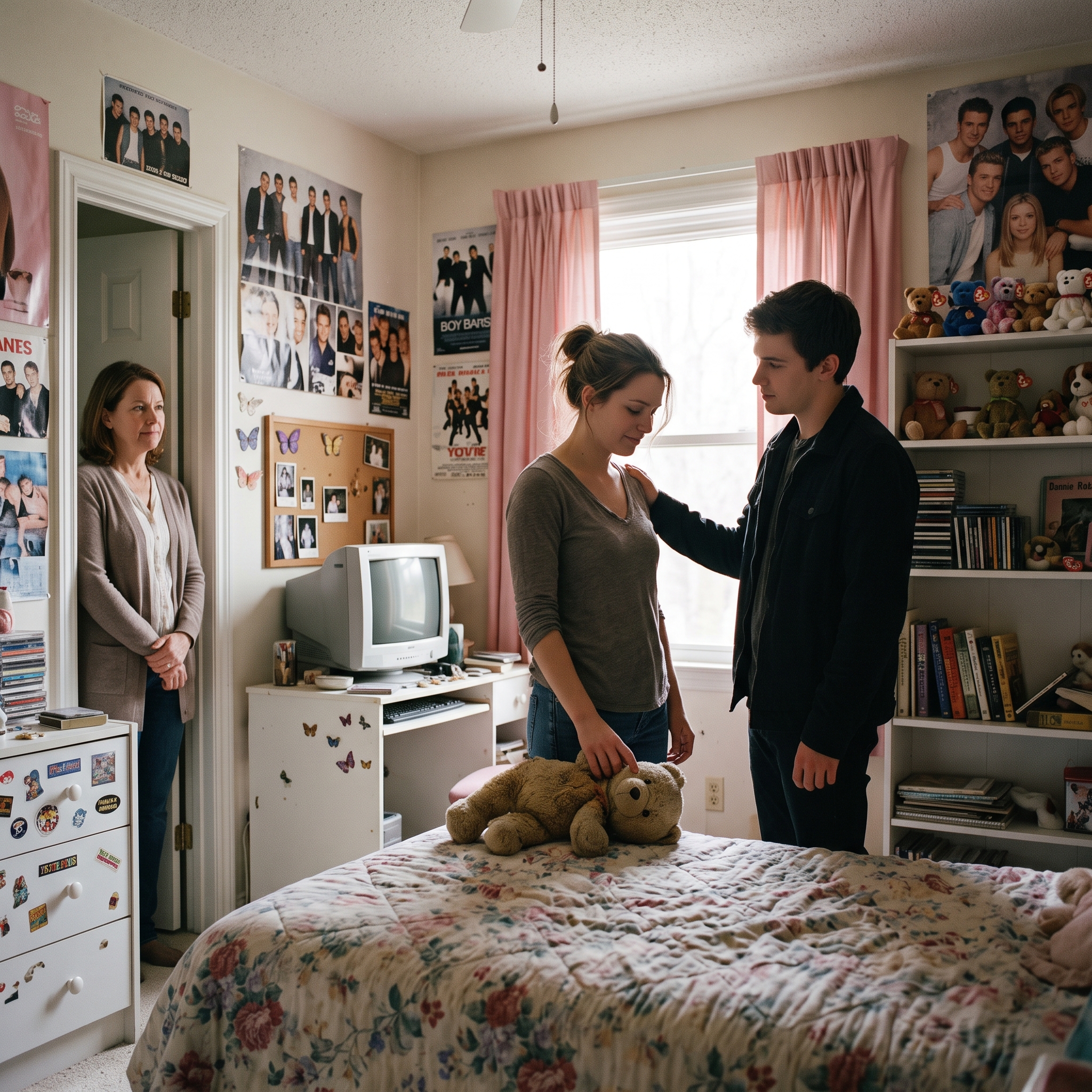
Emily’s bedroom remained untouched. Her books stayed on the shelves, her pink curtains remained beside the window, and her favorite stuffed bear sat where she had left it.
Every year, Nora placed a single white daisy on Emily’s pillow.
She never explained why she chose that flower.
And every year, I continued searching for my daughter.
I put up missing-person posters, contacted investigators, and followed every possible lead. Most led nowhere.
Nora grew up. She finished school, went to college, and slowly began calling me Dad.
I loved her as my daughter, but the empty room down the hall remained a constant reminder of the child who had vanished.
Then, ten years after that rainy Friday, Nora received a message that changed everything.
It came from an account she did not recognize.
The message contained just one question:
“Did your dad stop looking for me after he adopted you?”
Nora stared at her phone, her face turning white.
A second message arrived.
“I need to know if he replaced me.”
Then came a photograph.
It showed a young woman with familiar eyes and a face I had spent ten years trying not to forget.
It was Emily.
Part 2: The Secret That Kept Two Sisters Apart
Nora called me into the living room and showed me the photograph.
For several seconds, I couldn’t speak.
The woman in the picture was older than the little girl I remembered. Her face was thinner, her hair longer, and there was a sadness in her expression that no photograph could fully explain.
But I recognized her eyes.
I had seen those eyes every morning for nine years.
“Is it really her?” I whispered.
Nora nodded, tears streaming down her cheeks.
“I think so, Dad.”
I took the phone from her with trembling hands. The photograph had been taken outdoors, perhaps in front of a building. Emily wore a dark jacket and looked directly at the camera.
I wanted to believe it was my daughter.
At the same time, I was terrified of hoping again.
For ten years, I had learned to protect myself from false promises. I had followed supposed sightings, answered anonymous calls, and driven hours to meet people who claimed they had information.
Every time, I returned home with nothing.
But this photograph felt different.
Nora typed a reply.
He never stopped searching for you.
She sent pictures of Emily’s untouched bedroom, the missing-person posters we had kept, and the white daisies she placed on the pillow every year.
Then we waited.
Minutes passed.
Finally, another message appeared.
They told me he was happier without me.
I felt as though the room had tilted beneath my feet.
“Who told her that?” I asked.
Nora looked away.
“I don’t know everything yet.”
Her answer frightened me more than the photograph.
“What do you mean, you don’t know everything?”
She pressed her hands together, struggling to speak.
“I need to meet her first. Please, Dad. Let me find out what happened.”
I wanted to demand answers immediately. I wanted to call the police, contact every relative, and search every place where Emily might be hiding.
But Nora had been carrying something for a long time. I could see it in her face.
So I nodded.
“Bring her home,” I whispered. “If it’s really Emily, bring my daughter home.”
Nora left that afternoon.
I spent the next several hours pacing between the kitchen and the living room. Every sound outside made me look toward the window.
When the door finally opened, I stood so quickly that my chair fell backward.
Nora stepped inside.
And behind her stood a woman I had not seen in ten years.
Emily.
The reunion I had imagined for a decade
For a moment, neither of us moved.
I had imagined this reunion hundreds of times. In my dreams, Emily was always the little girl who had run into the rain, and I always found the perfect words to explain how sorry I was.
But the woman standing before me was no longer a child.
She looked frightened.
I took one step toward her, then stopped.
“Emily?”
Her lips trembled.
“It’s me, Dad.”
My knees nearly gave way.
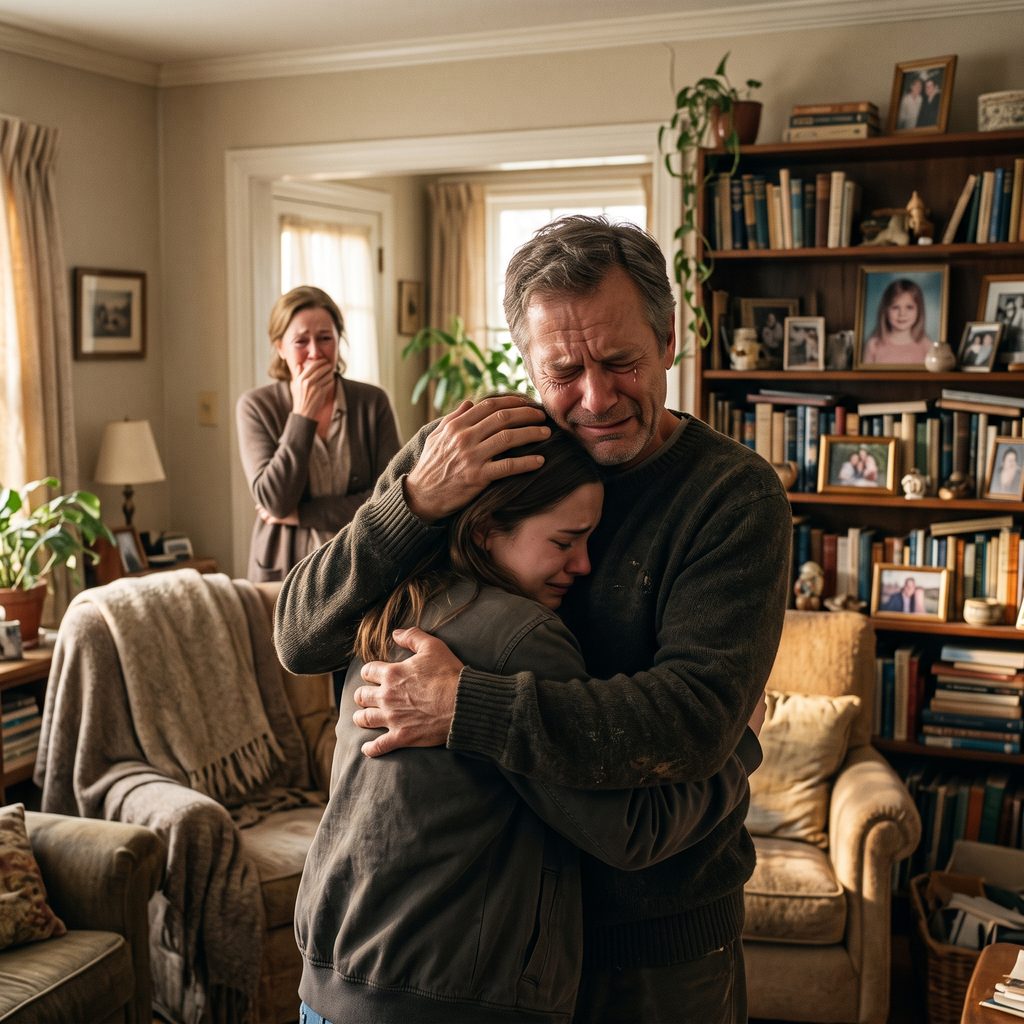
I crossed the room and pulled her into my arms. She held me so tightly that I could feel her shoulders shaking.
“I never stopped looking for you,” I whispered. “Not for one day.”
She buried her face against my shoulder.
“They told me you didn’t want me anymore.”
“No.” My voice broke. “No, sweetheart. I wanted you home every single day.”
For several minutes, we could do nothing but cry.
Nora stood beside us, wiping her cheeks with her sleeve.
When Emily finally pulled away, I held her face in my hands, trying to understand how the child I had lost had returned as a stranger who still somehow felt like home.
“Where have you been?” I asked.
She looked toward Nora.
“It’s a long story.”
“Then we’ll take all the time we need.”
We sat together at the kitchen table. I made tea that none of us drank, and Emily wrapped both hands around her cup as if she needed something to hold.
Then she began to tell me what had happened after she left the house that rainy Friday.
The people she thought she could trust
After our argument, Emily had called her grandparents.
She was upset, frightened by the storm, and desperate to feel that someone understood her. Grant and Helen collected her, telling her she could stay with them until things calmed down.
Emily believed it would be one night.
She thought I would call the next morning, apologize, and come to get her.
Instead, according to Emily, her grandparents told her that the police were searching everywhere and that returning home would only make the situation worse.
They said the town was angry. They told her that people believed she had caused Nora’s disappearance—or that Nora had done something to her.
The story changed each time Emily asked a question.
At first, they insisted she needed to remain out of sight until the confusion settled. Later, they told her that I had become so overwhelmed by the search that I no longer wanted her to return.
“They said you were tired of being my father,” Emily whispered.
I stared at her in disbelief.
“Emily, I would never say that.”
“I know that now.”
She explained that her grandparents had taken her to relatives in another state. They enrolled her in a different school and used family documents and her mother’s maiden name to establish a new identity.
Whenever Emily asked to contact me, they found a reason to stop her.
They told her that I had moved on.
They told her that I had blamed her for leaving.
And when she learned that I had adopted Nora, they showed her a photograph from the courthouse.
They did not explain why I had adopted Nora or how desperately I had continued searching for Emily.
They showed her only the picture.
“They said you had replaced me,” Emily said. “They said you had given my room to her and stopped talking about me.”
I felt sick.
All those years, I had preserved every book, every photograph, and every little object Emily had left behind. I had refused to let anyone use her bedroom because I couldn’t bring myself to change it.
And somewhere else, my daughter had been made to believe that I had forgotten her.
“Why didn’t you try to contact me?” I asked gently.
Emily lowered her eyes.
“I did. More than once. They said you wouldn’t answer.”
She told us that she had been young, confused, and afraid. She had no reason to believe that adults she trusted would deliberately deceive her.
As she grew older, she began to question their explanations. Some details didn’t make sense. The dates changed. The stories contradicted one another.
But by then, years had passed.
Emily had begun to fear that returning would expose her to rejection all over again.
“What made you reach out now?” Nora asked.
Emily looked at her.
“Because I found something they didn’t want me to see.”
She took a folded document from her bag and placed it on the table.
It was an old letter, creased along the edges. The handwriting was familiar to Emily.
Her grandfather’s.
She had found it among papers that belonged to her grandmother.
The letter referred to the night Emily disappeared. It described arrangements for taking her away and expressed concern that the police might discover the truth.
The language was careful, but the meaning was unmistakable.
Emily’s grandparents had not simply offered her shelter.
They had planned to keep her away from her father.
I read the letter twice, my hands growing colder with every line.
Then Emily looked at Nora.
“There’s something else,” she said.
Nora’s face crumpled.
“I know.”
I turned toward my adopted daughter.
“What do you know?”
For the first time that evening, Nora looked directly at me without trying to hide her fear.
“I didn’t know where they took Emily,” she said. “But I knew they were lying about what happened that night.”
The room fell silent.
Nora took a shaky breath.
“And I was afraid that if I told the truth, they would take you away from me, too.”
I felt my heart break for the little girl she had been.
But I also understood that the story wasn’t finished.
Because the secret Emily had carried for ten years was only half the truth.
And Nora had been carrying the other half.
Part 3: The Truth Finally Comes Home
Nora began to cry before she could finish her first sentence.
“I was twelve, Dad. I didn’t know what to do.”
I reached across the table, but she pulled her hands into her lap.
“I should have told you. I should have told the police. Every year, I promised myself I would find a way to explain everything.”
“Then tell me now,” I said softly.
Nora looked at Emily.
“After we left your house that night, we argued. Emily was angry with you, and I was trying to convince her to go home. We walked toward the main road, but then her grandparents’ car pulled up.”
Emily nodded slowly.
“I remember.”
Nora continued.
“They told Emily they would take her somewhere safe. She was upset, and she agreed to go with them. I thought they were taking her to their house.”
She paused, wiping her eyes.
“Before they drove away, Grant pulled me aside. He told me I had to keep quiet about where Emily had gone. He said the adults would handle everything.”
“What did you say?” I asked.
“I said I wanted to go home. He told me that if I caused trouble, social services would take me away from my grandmother. He said no one would believe an orphan over respected adults.”
The words landed heavily in the room.
Nora had been a frightened child who had already lost both parents. Her grandmother was becoming increasingly ill, and the possibility of being sent into foster care terrified her.
Grant had understood exactly what she feared.
“He told me you would never forgive me if I made things worse,” Nora whispered. “I thought if I stayed quiet, Emily would come home soon. I thought I could tell you everything once she was back.”
“But she never came back,” Emily said.
Nora nodded.
“And every day I waited, it became harder to tell the truth. When people started accusing me, I wanted to defend myself, but I was afraid of losing the only home I had left.”
I looked at the two women sitting across from me.
One had spent ten years believing her father no longer wanted her.
The other had spent ten years believing that telling the truth would cost her the family she had finally found.
And the people responsible had allowed both fears to grow.
The confrontation nobody could avoid
The following morning, I contacted the sheriff and arranged to speak with an attorney. Emily agreed to provide her account, and Nora told investigators what she remembered from the night she disappeared.
We also brought them the letter.
I knew that an old document and two statements would need to be examined carefully. I did not want anger to replace evidence, and I did not want another decade of unanswered questions.
But I could no longer allow the people who had caused this suffering to control the story.
A few days later, our family attended a gathering organized to remember Emily and support efforts to find missing children. For years, the event had been a painful reminder of the daughter I had lost.
This time, I walked into the hall with both my daughters beside me.
Conversations stopped.
People stared at Emily, struggling to understand what they were seeing.
Some looked confused. Others covered their mouths.
A woman near the entrance began to cry.
Emily squeezed my hand.
“Are you ready?” I asked.
She nodded.
Then her grandparents approached us.
Helen’s face went pale when she saw Emily. Grant stopped several steps away, his expression hardening as he looked from his granddaughter to the letter in my hand.
“Emily,” Helen said, reaching toward her.
Emily stepped behind me.
“Don’t,” she whispered.
I moved between them.
“You told me my daughter was missing,” I said to Grant. “You let me spend ten years searching for her while you knew she was alive.”
Grant’s jaw tightened.
“You don’t understand what we were trying to do.”
“Then explain it.”
He looked around the room, apparently aware that everyone was listening.
“We wanted to protect her. You were grieving, and the household was unstable. Emily needed a better environment.”
“She was a child,” I replied. “She needed her father.”
Helen began speaking rapidly, insisting that they had believed they were making the right decision. She said Emily had been upset and that they thought time apart would help.
But Emily finally found her voice.
“You told me Dad didn’t want me,” she said. “You told me he replaced me with Nora.”
Helen shook her head.
“We never meant for this to happen.”
“You had ten years to make it right.”
The room became silent.
Nora stepped forward.
“And you threatened me. You knew I was scared of losing my grandmother and my home. You used that fear to keep me quiet.”
For years, the town had looked at Nora as though she were responsible for Emily’s disappearance.
Now people were hearing another explanation.
My brother, who had repeatedly accused Nora of hiding the truth, lowered his head.
“I was wrong,” he told her.
Nora said nothing.
An apology could not return the years she had spent being treated as a suspect. It could not erase the cruelty of neighbors who had believed the worst about a frightened child.
But it was a beginning.
Authorities continued examining the allegations and the evidence we provided. I refused to announce conclusions that investigators had not reached. What mattered most was that Emily’s account was finally being heard and that Nora no longer had to carry her fear alone.
The room I never stopped keeping ready
That evening, Emily walked into her childhood bedroom for the first time in ten years.
I stood at the doorway, afraid that seeing it might hurt her.
The pink curtains were faded. Her books still lined the shelves, and the stuffed bear she had loved as a little girl sat on the dresser.
She stepped inside slowly.
“You kept everything,” she whispered.
“I couldn’t bring myself to change it.”
She picked up the bear and pressed it against her chest.
For a moment, she looked like the child who used to run through the house calling for me.
Then she turned toward the doorway.
“Dad?”
“Yes, sweetheart?”
“Did you really look for me all that time?”
I walked to her and took her hands.
“Every day. Even when I was afraid I would never find you, I kept looking.”
She began to cry again.
“I thought you had forgotten me.”
“Never.”
I held her while she cried, and for the first time in ten years, I no longer had to imagine what it would feel like to have my daughter home.
Later, Nora appeared at the door.
She looked uncertain, as though she were asking permission to enter a room she had spent years treating as sacred.
Emily noticed her immediately.
“Come here,” she said.
Nora hesitated.
“Emily, I—”
“You don’t have to explain everything tonight.”
“But I should have told Dad.”
“Yes,” Emily replied. “You should have. But you were a child, too.”
Nora covered her mouth, trying to hold back another sob.
Emily reached out her hand.
“You were my best friend before all of this happened. I don’t want us to lose another ten years.”
Nora crossed the room and took it.
They stood together beside the old bed, two women who had lost a decade to fear and lies but had somehow found their way back to one another.
I watched them laugh through their tears.
It was a small sound, fragile and unfamiliar after so many years of grief.
But it was real.
What I finally understood
I used to believe that the worst night of my life was the night Emily disappeared.
I blamed myself for our argument. I replayed my words, wondering whether I could have prevented her from walking out into the rain.
For years, guilt became part of my daily routine. I believed that if I had been a better father, perhaps my daughter would never have left the house.
But the truth was more complicated than that.
I had made a mistake. I had spoken cruelly to a child I loved, and I would always regret it.
Yet my mistake did not justify the decisions other adults made afterward. Emily deserved the chance to return home. Nora deserved protection instead of threats. Neither child should have been forced to carry the consequences of decisions made by people who claimed to love them.
Love without honesty can become a prison. Protection without respect can become control. And silence, even when it begins in fear, can allow pain to continue far longer than anyone intended.
That night, I understood something else.
I had not replaced Emily when I adopted Nora.
I had given a frightened child a home, just as Emily would have wanted me to do. My love for one daughter had never erased my love for the other.
The house was no longer the same place it had been ten years earlier. There were new memories to make, difficult conversations still ahead, and wounds that would not heal overnight.
But both my daughters were home.
Before going to bed, I walked down the hallway and turned off the kitchen light. Then I paused outside Emily’s room.
She and Nora were sitting on the floor, looking through old photographs and remembering the childhood they had shared.
I didn’t interrupt them.
For ten years, I had kept Emily’s room ready, hoping that one day she might return. I had thought the room itself was a promise that I would never give up.
Now I understood that the promise had never been about furniture, photographs, or faded pink curtains.
It was about love that refused to disappear, even when the truth seemed impossible to find.
I left their door slightly open and walked toward my own bedroom.
For the first time in a decade, I went to sleep without wondering where my daughter was.
And if someone asks me what brought my family back together, I won’t say it was a photograph, a letter, or even the truth finally being revealed.
Those things mattered.
But the real turning point came when two frightened daughters found the courage to speak, and the people who loved them finally listened.
Because sometimes finding your way home begins with one difficult sentence.
And sometimes, after years of silence, that sentence is enough to open the door.
