A Rude Woman Took My 6-Year-Old Daughter’s Window Seat—Then the Pilot Taught Her an Unforgettable Lesson
Part 1: The Window Seat That Meant Everything
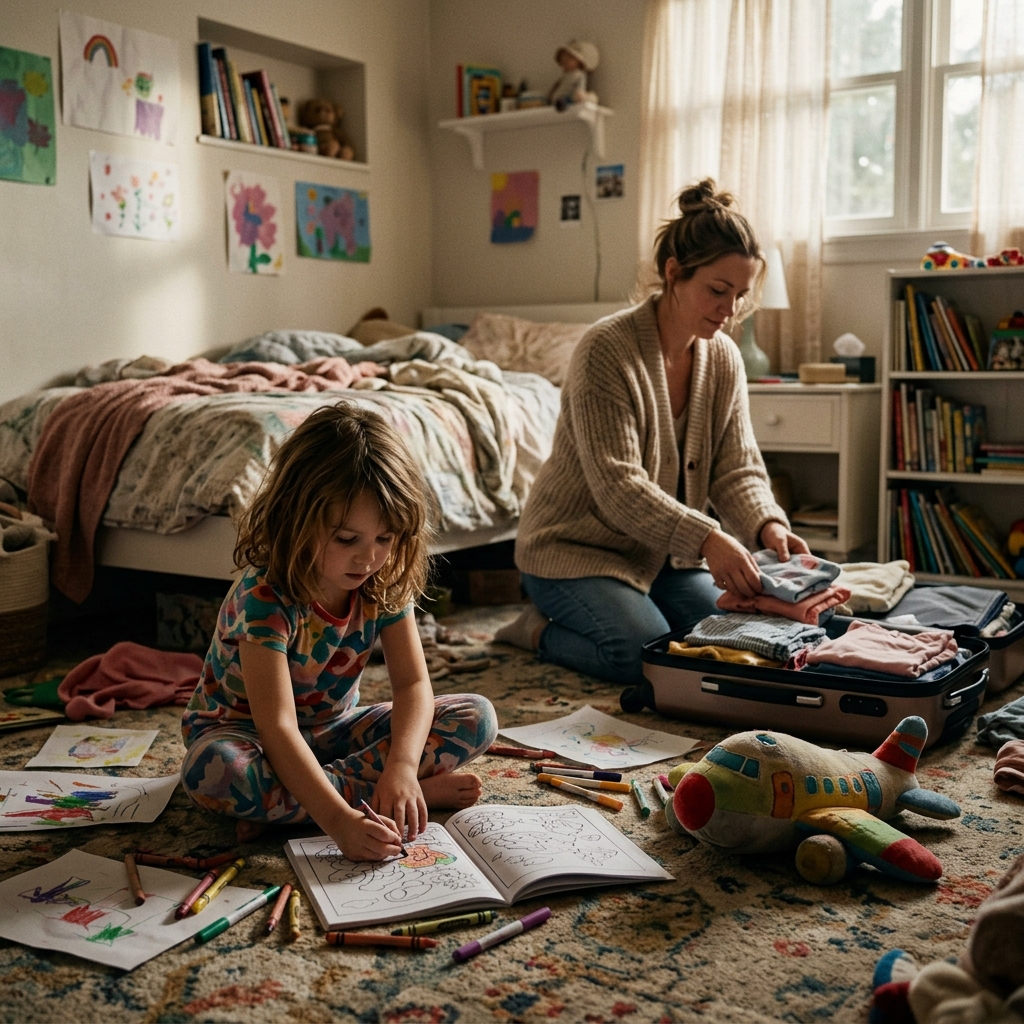
The night before our first family vacation in two years, I sat on the bedroom floor of my six-year-old daughter Emma’s room, surrounded by tiny clothes, coloring books, and the stuffed airplane she refused to leave behind. His name was Buzz, and Emma had carried him everywhere since her father died. She slept with him, took him to therapy appointments, and squeezed his soft blue wings whenever the world became too loud or confusing. Since losing my husband, Sean, I had learned how to keep our little household moving, even on the mornings when grief made getting out of bed feel impossible. I worked, paid bills, attended appointments, and tried to make sure Emma’s childhood still contained laughter instead of nothing but loss. Planning a four-day beach vacation had been my first attempt at doing something simply because it might make us happy. It wasn’t an extravagant trip, and we weren’t staying anywhere luxurious. I had saved for months to afford a modest hotel near the ocean, where Emma could play in the sand and watch the waves roll onto the shore. Yet the most challenging part of the journey wasn’t the expense or even the flight itself. It was preparing Emma for an experience she had never encountered before. Emma was autistic, and unexpected changes could overwhelm her in ways that were difficult for other people to understand. Bright lights, unfamiliar sounds, crowded spaces, and sudden disruptions could quickly turn an exciting day into a frightening ordeal. She needed time to process new experiences, and knowing what to expect made a tremendous difference. For weeks, we had practiced what would happen at the airport. I showed her pictures of airplanes, explained the security line, and watched videos of planes taking off. We counted down the days on a colorful calendar hanging beside her bed. Most importantly, I had purchased two adjoining seats months earlier: 7A for Emma and 7B for me. I deliberately paid extra for the window seat because watching clouds drift past the glass helped calm her when anxiety began to build. She loved the sky. She could spend hours watching clouds change shape, imagining them as castles, sleeping animals, or enormous pillows floating above the world. When she became overwhelmed, looking at the sky often gave her something peaceful to focus on. That evening, as I zipped her suitcase, she sat on her bed wearing pajamas covered in little stars. “Mommy, tomorrow we really fly?” she asked, holding Buzz against her chest. I smiled. “Tomorrow, sweetheart. We’ll get on a real airplane, and you’ll sit right beside the window.” Her face brightened. “And I can see the clouds?” “Every cloud you can find.” She hugged her toy and carefully placed it inside her small backpack, making sure its wings weren’t folded underneath anything else. I watched her with a mixture of pride and fear. I wanted to protect her from every disappointment life might bring, but I knew I couldn’t. All I could do was prepare her, stand beside her, and hope that the world would occasionally meet her with patience. Later, after Emma fell asleep, I checked our boarding passes one last time. Seat 7A. Seat 7B. Everything looked correct. An airline email had arrived earlier, mentioning an aircraft change and possible passenger reassignment. I had skimmed it while preparing dinner, assuming the airline had already handled whatever adjustments were necessary. Our assigned seats still appeared on the boarding passes, so I put my phone away. I had no idea that a small administrative mistake would soon turn our long-awaited vacation into a test of patience, compassion, and the kind of courage a mother discovers when her child needs her most.
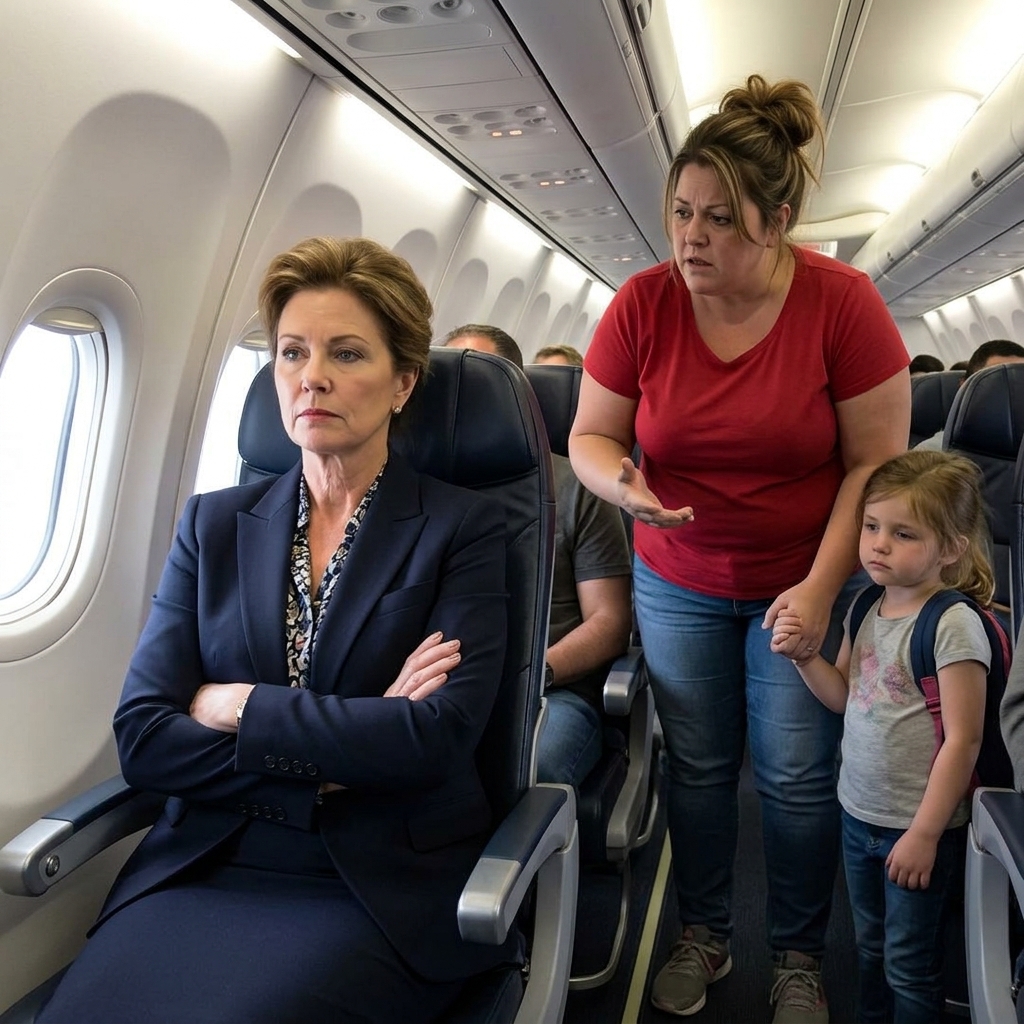
The following morning, Emma held my hand as we entered the airport terminal. Her eyes widened at the sight of the enormous airplane waiting beyond the windows. “Mommy, look! It’s bigger than the pictures!” she whispered, pressing Buzz against her chest. I crouched beside her and pointed toward the aircraft. “That’s our plane, sweetheart. Remember what we practiced? First we board, then we find our seats, and then we’ll fly above the clouds.” She nodded, repeating the steps quietly to herself. I had packed her noise-canceling headphones, favorite snacks, a coloring book, and several small activities to help her remain comfortable during the journey. Every detail had been considered because I knew how quickly uncertainty could overwhelm her. At the gate, however, I noticed the agent repeatedly checking her computer and speaking into her headset. She glanced toward the boarding entrance with a worried expression before returning to her screen. I wondered whether another flight had been delayed, but I didn’t ask. When our boarding group was called, Emma practically bounced with excitement. “We’re going to the sky now!” she announced. I laughed, took her hand, and followed the other passengers down the jet bridge. We entered the cabin and began searching for row seven. Then I saw her. A middle-aged woman with perfectly styled hair and an expensive-looking handbag was sitting comfortably in seat 7A, looking out the window as though she had every right to be there. She wore a tailored jacket, elegant jewelry, and the unmistakable expression of someone who wasn’t accustomed to being questioned. I checked my boarding passes, then looked at the overhead number. Row seven. There was no mistake. I approached with a polite smile. “Excuse me, ma’am. I believe you’re sitting in my daughter’s seat. She’s assigned to 7A, and I’m right beside her in 7B.” The woman slowly turned her head and examined me before looking briefly at Emma. “I’m sitting here,” she replied flatly. “I paid for a window seat.” “So did we,” I explained, keeping my voice calm. “Would you mind checking your boarding pass?” A flight attendant arrived moments later. Her name tag read Lisa, and she had the composed but tired expression of someone who had already dealt with several boarding problems that morning. I handed her our passes. She checked the numbers, examined the woman’s ticket, and frowned. “I’m very sorry,” Lisa said. “We had an aircraft change, and a seat was incorrectly reassigned. Your original seat was 14C, Ms. Reyes. Seat 7A was reserved by this family several months ago.” The woman, whom Lisa had addressed as Ms. Reyes, crossed her arms. I took a breath and explained that Emma was autistic, that this was her first flight, and that the window helped her manage anxiety. “I understand mistakes happen,” I said. “But this seat is important to her. We planned everything around it.” Ms. Reyes barely glanced at my daughter. “That’s unfortunate, but I’m not moving. I paid for a window seat, and I don’t see why her circumstances should become my problem.” I felt Emma’s fingers tighten around mine. Her eyes moved between the woman and the flight attendant, searching our faces for an explanation she could understand. I wanted to insist that the seat was ours, that we had booked it fairly, and that a little consideration shouldn’t be too much to ask. Instead, I looked at Emma and saw the first signs of distress gathering behind her expression. Lisa offered us two seats together farther back, apologizing repeatedly for the inconvenience. The boarding line had begun to gather behind us, and passengers were shifting impatiently. Ms. Reyes turned toward the window, already dismissing us. I swallowed the words rising in my throat. “All right,” I whispered to Lisa. “We’ll take the other seats.” I told myself that protecting Emma’s peace mattered more than winning an argument. Then I picked up our bags, took my daughter’s trembling hand, and followed the flight attendant toward the back of the plane, unaware that someone else had witnessed the entire exchange and was already considering what to do.
Part 2: A Quiet Act of Kindness Takes Flight
Our new seats were in row twelve, several rows behind the place where Emma had expected to sit. I helped her buckle her seat belt and arranged her backpack beneath the seat in front of us. She placed Buzz on her lap, but instead of smiling at the airplane around her, she stared at the beige wall beside the aisle. “Mommy, where is my window?” she asked. I felt a painful knot tighten in my stomach. “We’re a little farther back than we planned, sweetheart. We’ll still get to the beach, and we’ll still see the ocean.” She looked down at her toy. “But I wanted the clouds.” There was no anger in her voice, only disappointment so sincere that it nearly broke my heart. I slipped her headphones over her ears, opened her coloring book, and began our familiar counting game. “Let’s find the airplanes on this page. How many can you see?” She pointed to the first one, then the second. For a few minutes, the activity seemed to help. Around us, passengers settled into their seats, overhead compartments closed, and the cabin filled with the low rumble of engines. I tried to concentrate on the small things I could control: making sure Emma was comfortable, keeping her water bottle within reach, and reminding her that the noises were normal. Across the aisle sat an elderly woman with silver hair pinned neatly behind her head. She had a kind face and the calm expression of someone who understood that not every struggle needed to be met with advice. She smiled gently at Emma before turning toward me. “Is this her first flight?” she asked. I nodded. “She’s been looking forward to it for months.” The woman glanced at the coloring book, then at the headphones covering Emma’s ears. “She’s doing very well,” she said softly. Her words were simple, but I hadn’t realized how badly I needed to hear them. Too often, strangers saw only the difficult moments: a child covering her ears, rocking in her seat, or struggling with a sudden change. They rarely saw the preparation, the patience, or the countless little victories that had come before. I thanked the woman and returned my attention to Emma. When the airplane began taxiing, Emma’s fingers curled around Buzz’s wings. I held her hand and quietly narrated what was happening, just as we had practiced. “We’re moving toward the runway. Soon the engines will get louder, and then we’ll lift into the air.” She leaned against me, listening. The plane accelerated, and the world outside the cabin windows became a blur. Moments later, we rose above the airport. I watched Emma’s face, hoping she might feel excited rather than frightened. She tried to look toward the front of the cabin, but all she could see was the aisle and the back of another passenger’s seat. “Mommy,” she whispered through her headphones, “I can’t see the sky.” I kissed the top of her head. “I know, baby. I’m sorry.” The older woman across the aisle noticed her disappointment. “Would you like to look through my window for a moment?” she asked. I helped Emma turn carefully toward the narrow view available from the neighboring seat. She caught a glimpse of blue and a few distant clouds. For a second, her expression softened, but when she settled back into her own seat, the anxiety returned. I felt helpless. I had done everything I could think of to prepare her, yet a stranger’s refusal to move had taken away the one thing I had believed would make the flight manageable. A little farther forward, Ms. Reyes was taking photographs of the wing and smiling at her phone. I looked away before resentment could take hold. I didn’t want to spend our first family vacation thinking about someone else’s selfishness. I wanted to remember Emma’s excitement, her little voice asking questions, and the moment she first saw the clouds. So I took a deep breath and began counting with her again, one cloud imagined at a time.
About an hour and a half into the flight, Lisa came down the aisle with the beverage cart. She paused beside our row, asked whether Emma needed anything, and gave me an encouraging smile. I told her we were managing, although my tired expression probably revealed more than my words. She nodded, then continued toward the rear of the cabin. As she passed row nineteen, she stopped beside a couple seated together near a window. I recognized them as the passengers she had spoken to while we were boarding. Lisa leaned down and spoke quietly. The couple listened, glanced in our direction, and exchanged a few words before the woman nodded. Lisa thanked them warmly and returned to her duties. I wondered whether they had volunteered to help another passenger, but I was too focused on Emma to think much about it. Then the captain’s voice came over the public-address system. “Good afternoon, ladies and gentlemen. This is Captain Brown speaking. I hope you’re enjoying the flight. Before we continue, I’d like to recognize something important about the people who share our journey.” His voice was calm and professional, but there was a deliberate warmth in it that made several passengers look up from their phones. “Travel can be stressful, and sometimes unexpected circumstances give us an opportunity to show patience and consideration for one another. Today, we’d like to thank someone for helping us remember how much a simple act of kindness can mean.” I assumed he was referring to a passenger who had assisted someone with luggage or helped a family during boarding. I adjusted Emma’s headphones and encouraged her to continue coloring. A moment later, the captain continued. “We have a special presentation for the passenger currently seated in 7A. Congratulations, Ms. Reyes. You’ve been selected to receive a small gift from our crew.” Ms. Reyes immediately sat straighter. She lowered her phone and looked around with delighted surprise. “Oh, really?” she exclaimed, her voice suddenly cheerful. “That’s wonderful!” Lisa approached her seat carrying a neatly wrapped box. Several passengers watched curiously as the flight attendant handed it over. Ms. Reyes smiled broadly, clearly enjoying the attention. “I never win anything,” she said, turning the box so she could inspect it. “This is lovely.” I barely paid attention. Emma had begun rocking gently, and I was whispering our counting game, trying to keep her from becoming overwhelmed by the unfamiliar sounds. Then a sharp cry cut through the cabin. “What is this?” Ms. Reyes shouted. I looked up. She was standing halfway out of her seat, gripping the open box with both hands. Her face had turned crimson, and her earlier smile had vanished. Passengers turned toward her in confusion. Even Emma lifted her head, startled by the sudden noise. I reached for her hand and squeezed it gently. “It’s okay, sweetheart. You’re safe.” Ms. Reyes looked toward the front of the airplane as if she couldn’t believe what she had just discovered. Her voice rose again. “Who thought this was funny? How dare you embarrass me like this?” Lisa stood beside her, composed and silent. Across the aisle, the elderly woman lowered her magazine and watched with quiet interest. I couldn’t see what was inside the box, and I had no idea why a complimentary gift had provoked such an angry reaction. But as Ms. Reyes continued protesting, I realized that whatever the crew had planned, it had something to do with the incident in row seven. The cabin grew quieter, and the captain’s voice returned over the speakers. This time, everyone seemed to be listening.
Part 3: The Message That Changed the Cabin
Captain Brown spoke with the same measured calm, never raising his voice or allowing the situation to become a spectacle. “Ms. Reyes, our crew would like to clarify the purpose of this presentation. The gift was intended to recognize the importance of kindness when traveling with others.” Lisa gently took the box from the woman’s trembling hands. Inside was a small envelope containing a handwritten card. The flight attendant asked whether she could read it aloud, and Ms. Reyes stared at her in disbelief. The captain continued, “Earlier today, our ground team informed us of a seating problem involving a young child whose reserved window seat had been affected by an aircraft change. We understand that these changes can create confusion, and our crew always works to resolve them fairly.” He paused briefly before continuing. “We also learned that the child and her mother explained why the original seat was particularly important to them. Unfortunately, the situation could not be resolved at the gate.” Lisa opened the card and read its message in a clear, respectful voice. “On behalf of our crew, we would like to thank every passenger who chooses consideration over convenience. For a child experiencing her first flight, a window seat can represent far more than a place to sit. It can provide reassurance, excitement, and a chance to experience the journey in a way that feels comfortable. We are grateful to those who recognize when a small gesture can make a lasting difference.” The cabin fell silent. No one laughed, and no one shouted. The message wasn’t an accusation, but its meaning was unmistakable to anyone who had witnessed the dispute. Ms. Reyes looked down at the card, then toward the passengers around her. Her expression shifted from anger to embarrassment. “This is ridiculous,” she muttered. “I paid for a window seat.” The captain responded without hostility. “We understand that passengers have expectations when they purchase a ticket. Our responsibility is to correct seating errors as fairly as possible while ensuring that everyone is treated with dignity. We also appreciate passengers who are willing to help when circumstances change.” He then announced that a couple seated in row nineteen had voluntarily offered their window seats to Emma and her mother once the seat belt sign was switched off and it was safe to move. A gentle wave of applause spread through the cabin. It began with someone several rows behind us, then grew as other passengers joined in. I sat frozen, trying to understand what was happening. I hadn’t complained to the crew beyond explaining our original reservation. I hadn’t asked the captain to intervene, and I certainly hadn’t expected the entire airplane to hear about our experience. My first reaction wasn’t satisfaction. It was relief that someone had finally understood why the seat mattered. I looked at Emma, who was watching my face through the space between her headphones. “Mommy, what happened?” she asked. “Someone is helping us, sweetheart,” I whispered. “We’re going to see the clouds after all.” Lisa came to our row and crouched beside Emma, speaking gently enough that the announcement wouldn’t overwhelm her. “I have some good news for you. A very kind couple has offered you their window seat. Would you like to sit by the window when it’s safe to move?” Emma’s eyes widened. “The sky window?” “The sky window,” Lisa confirmed with a smile. I felt tears gathering before I could stop them. I had spent the morning swallowing disappointment, trying to protect my daughter from an experience she wasn’t ready to understand. Now a stranger’s generosity had given us a chance to recover the moment I feared we’d lost. As Lisa stood, she briefly glanced toward the front of the cabin, where Captain Brown was continuing his flight duties. She didn’t celebrate the woman’s embarrassment or invite anyone to jeer. Instead, she focused on what mattered: making sure a little girl could enjoy her first flight. Ms. Reyes lowered herself into her seat and stared at the envelope. The attention she had initially welcomed had become uncomfortable, and I could see that she wanted the incident to disappear. I didn’t feel the triumph I might once have imagined. I felt something quieter and more complicated. I was grateful to the crew, grateful to the passengers who had offered their seats, and grateful that Emma would have a memory of the journey that wasn’t defined by a stranger’s refusal to show compassion. But I also wondered whether public embarrassment was really the lesson anyone needed. What mattered most was not that Ms. Reyes had been exposed. It was that my daughter had finally been seen as a child whose feelings deserved consideration, just like anyone else’s.
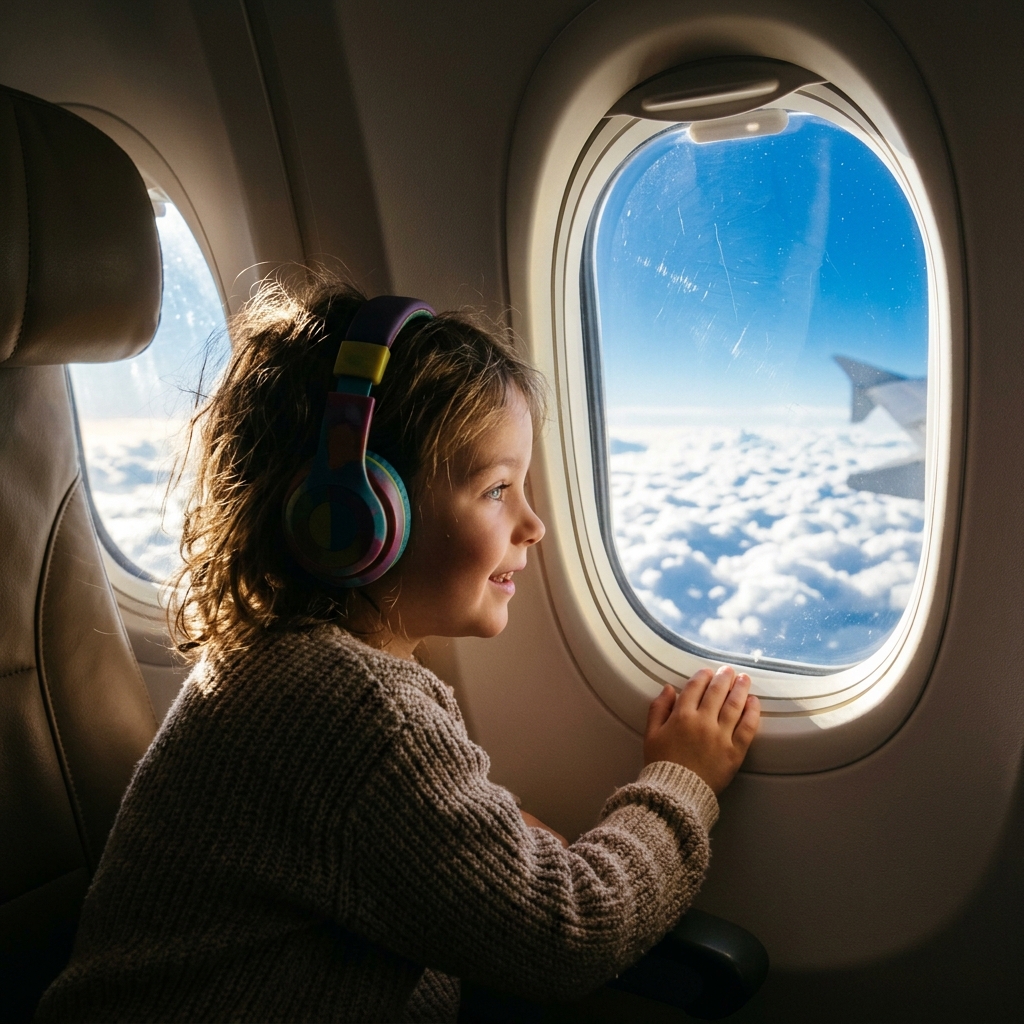
When the seat belt sign switched off and the cabin crew confirmed it was safe to move, Lisa returned to help us make the change. The couple in row nineteen stood to let us pass. The woman had warm brown eyes and a gentle smile, while her husband carefully lifted their bags from the overhead compartment. “We’re happy to help,” he told me. “We remember our children’s first flights. Those little moments stay with you.” I thanked them, struggling to find words that could express what their gesture meant. The woman knelt slightly so she could speak to Emma without towering over her. “I hear you like clouds,” she said. Emma nodded, clutching Buzz. “They look like pillows.” The woman laughed softly. “Then you’ve come to the right place.” I helped Emma into the window seat and fastened her seat belt. She leaned forward, placed one hand against the glass, and stared at the enormous blue sky beyond it. For several seconds, she didn’t speak. The clouds drifted past in great white shapes, illuminated by sunlight, and the reflection of her face appeared faintly in the window. Then she turned toward me, her entire expression transformed. “Mommy! They’re real!” I laughed through my tears. “Yes, baby. They’re real.” She pointed at a long cloud stretching across the horizon. “That one looks like a dragon. And that one looks like a giant bed!” Her excitement was so pure that the people seated nearby began smiling. I watched her describe every shape she could find, and I felt the tension that had followed me since boarding finally begin to ease. The airplane hadn’t changed. The engine noise was still there, strangers still moved through the aisle, and the journey remained unfamiliar. But Emma had found something reassuring to focus on, and that made all the difference. A few rows ahead, Ms. Reyes remained unusually quiet. Once, I caught her looking in our direction. Her expression was difficult to read, but I didn’t hold her gaze. I wasn’t interested in winning an argument or proving that my daughter deserved more consideration than anyone else. I wanted Emma to enjoy the view without sensing the tension that had surrounded her earlier. Lisa checked on us again and brought Emma a small activity sheet featuring an airplane. She also explained that Captain Brown would be happy to greet Emma after landing, provided the operational arrangements allowed it. Emma listened with wide eyes, then returned to watching the clouds. I thanked Lisa, and she smiled. “You don’t need to thank us for caring about our passengers,” she said. “We want every child to feel welcome.” Those words stayed with me long after she moved away. As the flight continued, Emma began pointing out clouds to the elderly woman who had offered her a glimpse through the window earlier. The two of them invented stories about floating castles and sleepy whales, and for the first time that morning, I relaxed enough to enjoy the journey myself. I thought about Sean, about how he would have laughed at Emma’s imaginary dragon and taken dozens of photographs of her delighted face. Grief had taught me that happiness could return without asking permission, sometimes in the middle of an ordinary afternoon when you least expected it. Looking at my daughter, I understood that the most important part of the day had never been the argument, the announcement, or the gift box. It was this moment: Emma sitting beside the window, feeling safe enough to be curious, discovering that the world could still surprise her with beauty. And as the clouds slipped past the glass, I realized that our first flight was becoming something I would remember for the rest of my life.
Part 4: The Lesson That Followed Us Home
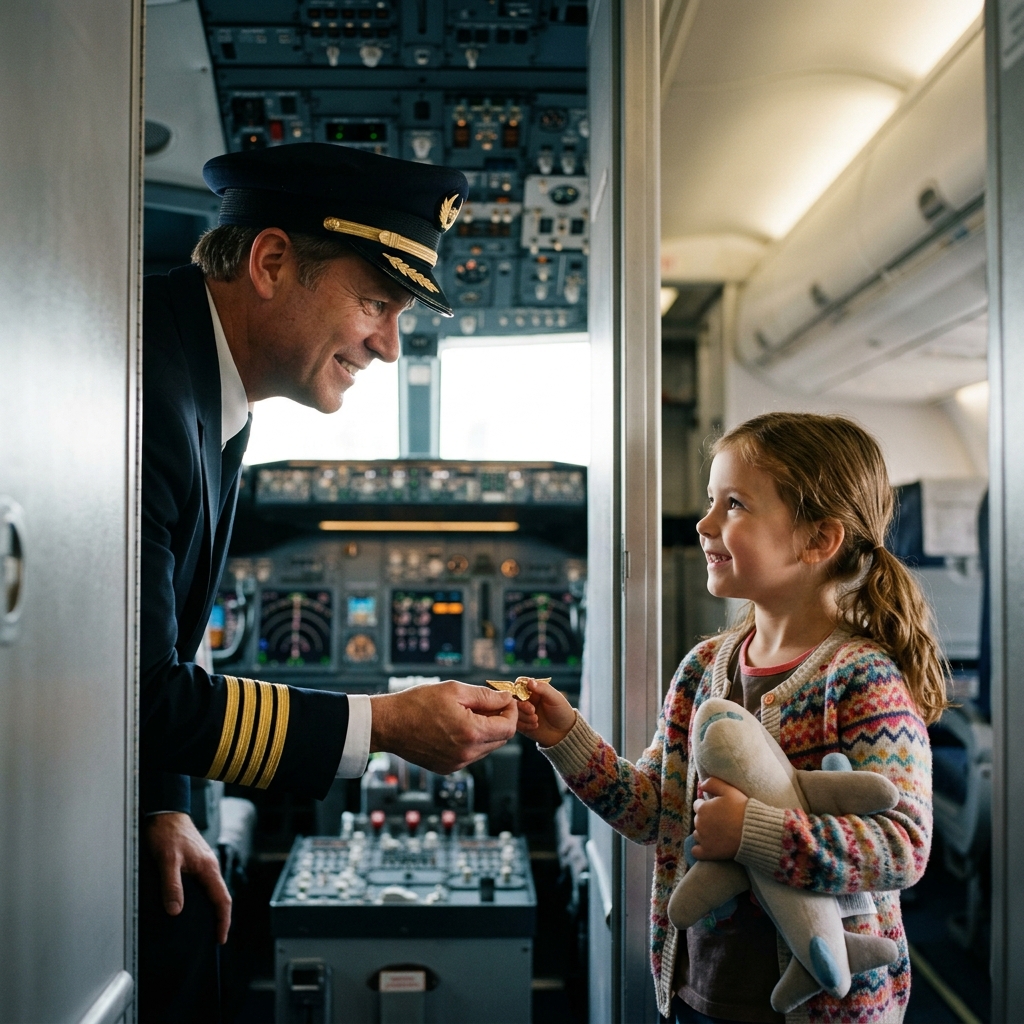
After the airplane began its descent, Emma finally grew quiet. She rested Buzz against her chest and watched the coastline emerge beneath the clouds, the sunlight reflecting off the water in shimmering ribbons. “Mommy, is that the ocean?” she asked. I leaned closer to the window. “Yes, sweetheart. That’s the ocean we’ve been talking about.” She pressed her fingertips against the glass, her eyes following the changing landscape below us. “It’s so big,” she whispered. I felt my throat tighten. For months, I had imagined this moment, wondering whether Emma would enjoy the flight or whether the unfamiliar experience would become too much for her. I had prepared for the difficult possibilities, packed everything I could think of, and rehearsed every step. What I hadn’t prepared for was the kindness of strangers. When the plane landed and the seat belt sign switched off, passengers began collecting their belongings. Lisa came to our row and asked Emma whether she would like to meet Captain Brown. Emma nodded enthusiastically, clutching Buzz beneath her arm. We waited until the crew confirmed that it was appropriate to approach the front of the cabin. Captain Brown greeted us near the cockpit entrance with a warm smile. He introduced himself, then looked down at Emma. “I hear this was your first flight,” he said. “What did you think?” Emma considered the question seriously. “The clouds look like pillows,” she answered. The captain laughed. “That’s an excellent description. I might have to use that on my next flight.” He presented her with a small pair of golden pilot wings, which she held as carefully as if they were made of glass. “These are for you,” he said. “Keep exploring, keep asking questions, and keep looking for the beautiful things around you.” Emma beamed. I thanked him for the kindness he and his crew had shown us. He listened, then spoke quietly so Emma wouldn’t feel that the adults were discussing her as though she weren’t there. “You did a wonderful job preparing her for this journey,” he told me. “Travel can be unpredictable, and families sometimes need a little extra patience from the people around them. We should all remember that.” His words brought tears to my eyes because they acknowledged something I had struggled to explain for years. Parenting Emma wasn’t about expecting everyone to change their lives for us. It was about finding ways to help her participate in the world while respecting her needs, and hoping others would meet her halfway when a little flexibility could make a difference. I had spent so much time trying to anticipate every obstacle that I sometimes forgot to notice the people who were willing to help. As we walked toward the terminal, Emma held my hand in one hand and Buzz in the other, her golden wings pinned carefully to her shirt. “Mommy, can we fly again someday?” she asked. I looked down at her smiling face. “Of course we can.” For the first time in a long while, the thought of another journey didn’t fill me with dread. It filled me with hope.
Our vacation was everything I had hoped it would be. Emma spent hours collecting seashells, building sandcastles, and watching waves roll toward her feet before retreating into the ocean. She showed her golden pilot wings to nearly everyone we met and explained that a real airplane captain had given them to her because she had been brave on her first flight. Each evening, we sat near the water and watched the sky change from blue to pink, orange, and purple. Sometimes Emma talked about the airplane, describing the clouds she had seen and the stories she had invented. Other times, she simply sat beside me, listening to the waves. I thought about Sean often during those four days. I wished he could have been there to see her excitement, to hear her laugh, and to watch her run toward the water with the fearless determination that had always made him smile. His absence was still painful, but the vacation reminded me that grief didn’t have to occupy every corner of our lives. We could miss him and still make new memories. We could carry sadness and happiness together. On our return flight, the airline confirmed our seats, and Emma once again sat beside the window. This time, she knew what to expect. She placed Buzz on her lap, buckled her seat belt, and began pointing out clouds before the plane had even reached the runway. The journey home was not perfect, but it was ours, and that was enough. I never learned whether Ms. Reyes thought about what had happened after we left the airplane. Perhaps she dismissed it as an embarrassing misunderstanding. Perhaps, in a quieter moment, she considered how quickly a small decision could affect another person. I couldn’t know, and I didn’t need to. The lesson that stayed with me wasn’t that a rude passenger had been humiliated or that a pilot had found a clever way to make a point. It was that kindness became most meaningful when it turned into action. The couple in row nineteen had given up their seats without demanding praise. Lisa had noticed a family’s distress and quietly searched for a solution. Captain Brown had used his position to remind an entire cabin that the people around us were more than names on boarding passes. None of them could erase the difficulty of the morning, but together they had changed how it ended. And Emma, who had understood far less of the argument than the adults around her, had received something more valuable than a window seat: the chance to experience a new place without being defined by the moment she struggled. When we arrived home, I placed her golden wings on the shelf beside Buzz’s little travel bag. Emma looked at them proudly before asking when we could visit the ocean again. I laughed and promised we would plan another trip when we could. That night, after she fell asleep, I stood in her doorway and watched her peaceful face. I thought about how often people judge a situation without understanding what lies beneath it. A seat is sometimes just a seat. But sometimes it is a carefully prepared source of comfort for a child who experiences the world differently. Sometimes a quiet request is the result of months of planning, private struggles, and a parent’s desperate hope that one important thing will go right. We cannot always know what another person is carrying, but we can choose to respond with patience instead of contempt. I couldn’t control every challenge Emma would face, and I couldn’t guarantee that strangers would always understand her. What I could do was teach her that asking for help was not shameful, that her needs did not make her less deserving, and that kindness could come from unexpected places. I also hoped she would learn to offer that same kindness to others. As I turned off the bedroom light, I whispered a quiet thank-you to the people who had helped us that day. They had not simply given my daughter a better view of the clouds. They had reminded a tired mother that the world still contained people willing to stand beside her when things went wrong. And sometimes, that is the lesson we need most: we may not be able to make every journey easy, but we can make the journey gentler for someone else. Long after the airplane disappeared from the sky, that was the part of our first flight I carried with me.
